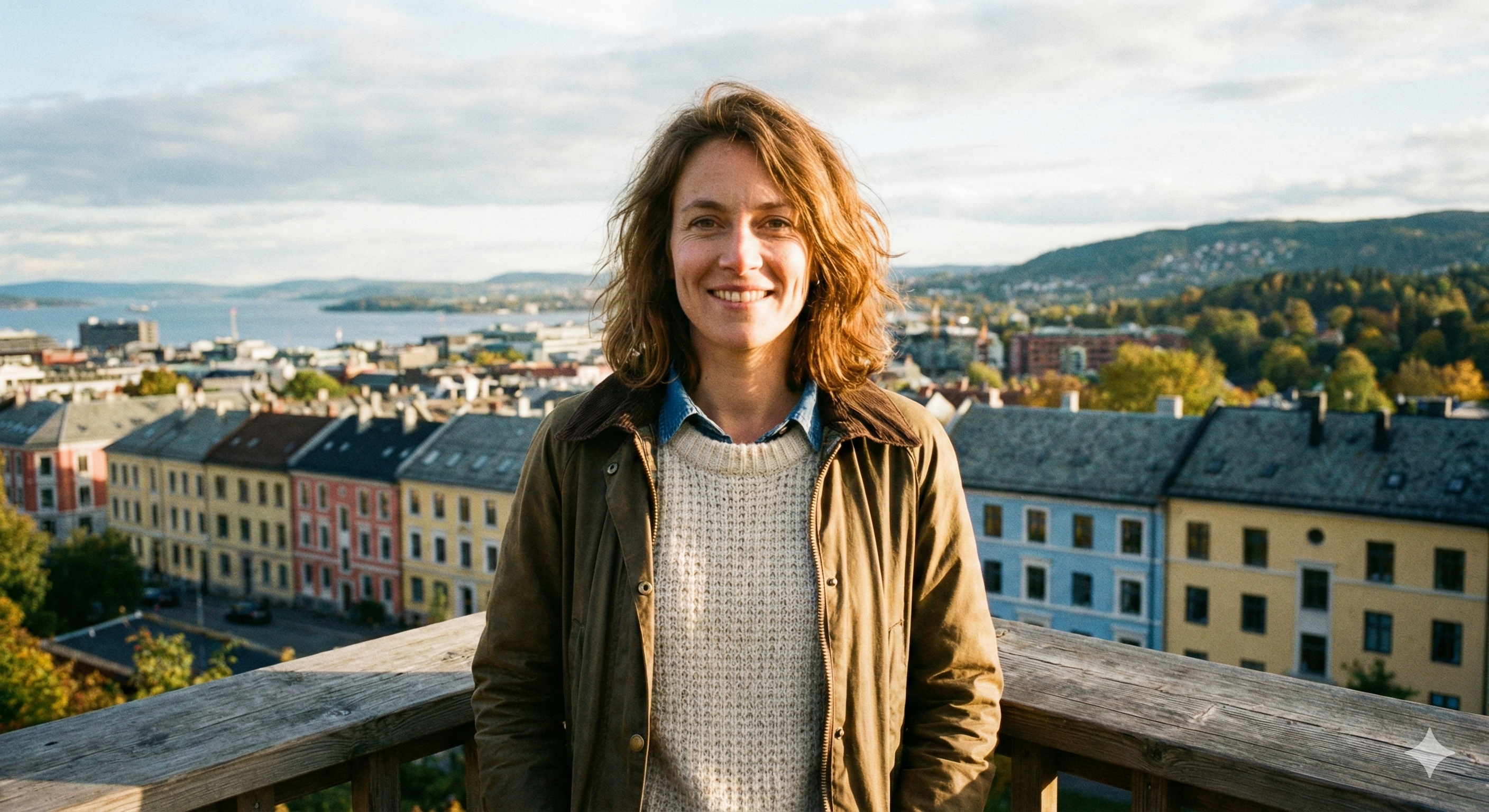
"Arendal is one of those Norwegian towns that grab you at first sight. When I first discovered Tyholmen, with its white wooden houses huddled together at the water's edge, I felt as if I were inside a painting. The archipelago is rarely beautiful, the summer atmosphere is unique in Norway and the town keeps an authenticity that bigger cities have sometimes lost. It is a destination I recommend to those who dream of a peaceful, charming coastal life."
— Ingrid
Why Arendal?
Arendal is a small coastal town of 45,000 inhabitants in the Agder region, in the heart of the Sørlandet, Norway's south coast. A former trading and sailing-ship town, it has kept a remarkable architectural heritage, particularly in the historic Tyholmen district, considered one of the finest ensembles of white wooden houses in all of Scandinavia. With its archipelago of hundreds of islands and islets, Arendal offers a unique setting, turned towards the sea and nature.
The town is now known well beyond its borders thanks to Arendalsuka, Norway's most important political week, which gathers thousands of decision-makers, journalists and citizens in the streets and on the quays every August. The Canal Street Music Festival, a landmark music event in the Sørlandet, confirms the cultural dynamism of a town that refuses to be defined by its small size.
For expats looking for an authentic way of life, far from the bustle of the big cities, Arendal offers an exceptional quality of life for the price. The cost of living is clearly lower than in Oslo or Bergen, the climate is among the mildest in Norway, and the proximity of Raet National Park gives daily access to unspoilt nature, from forests to sandy beaches and magnificent coastal landscapes.
+ Pros
- Tyholmen, an old town of white wooden houses among the most beautiful in Scandinavia
- Magnificent archipelago with hundreds of islands reachable by boat
- Arendalsuka, Norway's biggest political gathering every summer
- Mild and sunny climate, among the most clement in the country
- Very affordable cost of living for Norway
- Raet National Park right next door
- Charming and authentic town with a real sense of community
- Cons
- Very limited job market compared with the big cities
- Quiet town in winter, many activities are seasonal
- Far from the big urban centres (about 3 hours' drive from Oslo)
- Limited public transport, a car is almost essential
- Partly seasonal economy, tied to summer tourism
Where to live in Arendal?
Arendal is a compact town whose historic centre is concentrated around the harbour and the Tyholmen peninsula. The residential neighbourhoods spread over the mainland and over islands linked by bridges. With a modest population, distances remain short, but a car or a bike is often needed for daily journeys. Here are the five main neighbourhoods to know for your move:
Tyholmen / Sentrum
The historic heart of Arendal, with its protected white wooden houses, cobbled lanes and lively harbour. Living in Tyholmen means living in a place steeped in history, a stone's throw from the cafés, restaurants and shops of the centre. The housing is often flats in renovated old houses, with views of the harbour or the archipelago. The neighbourhood is particularly lively in summer.
Hisøy
An island linked to the mainland by a bridge, Hisøy is a residential neighbourhood popular with families. It has lovely detached houses surrounded by nature, coves for swimming and a peaceful village atmosphere. Children grow up between sea and forest, and the local school has a good reputation. Arendal's centre is a few minutes away by car or bike.
Tromøy
The largest island of the Arendal archipelago, Tromøy offers an exceptional setting for sea lovers. It has the region's finest beaches (Hove, Spornes), the historic Hove campsite and a relaxed atmosphere all year round. The housing is varied, from small wooden houses to properties with sea views. The island is linked to the mainland by a bridge.
Saltrød
A modern residential neighbourhood east of the centre, Saltrød has developed over recent decades with new housing estates and infrastructure. It has a shopping centre, schools, barnehager and quick access to the E18. It is the pragmatic choice for families who want new housing at a reasonable price while staying close to the centre.
Stoa
A commercial and residential area north of the town centre, Stoa is Arendal's main retail hub, with its large stores and shops. The neighbourhood offers some of the most affordable housing in the town, with good road access to the E18. Less charming than Tyholmen or the islands, Stoa is an economical and functional choice, especially for those who work in the retail area.
If you are arriving alone or as a couple and want to experience Arendal to the full, settle in Tyholmen or the centre: you will be at the heart of social and cultural life, especially in summer. For families, I recommend Hisøy without hesitation: it is an idyllic setting for raising children, with the sea within reach and a real neighbourhood life. Tromøy is a dream if you love beaches, but plan for a car because the distances make themselves felt in winter. And a small tip: in Arendal the rental market is tight in summer because of tourism, so start your search well in advance and check Finn.no from the spring.
— IngridCost of living in Arendal
Arendal is one of the most affordable towns in Norway to settle in. Rents are significantly lower than in Oslo, Bergen or even Kristiansand, which makes it a very attractive option for budget-conscious expats. Food and services remain at the usual Norwegian levels, but housing makes a major difference to the monthly budget. For a family, the saving can reach several thousand kroner a month compared with the big cities.
| Expense | Single | Couple | Family (2 children) |
|---|---|---|---|
| Housing | 7,500 NOK | 10,000 NOK | 13,000 NOK |
| Food | 3,500 NOK | 5,000 NOK | 8,000 NOK |
| Transport | 600 NOK | 1,200 NOK | 1,200 NOK |
| Leisure | 2,000 NOK | 2,800 NOK | 3,500 NOK |
| Other | 1,900 NOK | 2,000 NOK | 2,300 NOK |
| TOTAL | ~15,500 NOK (~$1,640 / £1,230) |
~21,000 NOK (~$2,230 / £1,660) |
~28,000 NOK (~$2,970 / £2,220) |
The AKT bus network serves Arendal and its surroundings, with a monthly pass at about 650 NOK. However, a car remains almost essential for daily journeys, especially if you live on the islands or on the outskirts. Local ferries reach some islands of the archipelago in summer. For shopping, the Stoa shopping centre has all the usual chains (Rema 1000, Kiwi, Coop), and the harbour market in summer offers local produce and fresh fish at reasonable prices.
Working in Arendal
Arendal's job market is modest compared with the big Norwegian cities, but it has interesting niches. The town has positive momentum thanks to the emergence of a tech cluster and the presence of regional public institutions. Remote working has also opened up new possibilities for those who want to enjoy Arendal's quality of life while working for companies based in Oslo or elsewhere.
Sectors that are hiring
- Technology and innovation: Arendal is developing a fast-growing tech cluster, with companies specialising in green technologies, digital and Industry 4.0. The Eureka Næringshage innovation park brings together innovative start-ups and SMEs. The sector attracts developers, engineers and digital profiles.
- Public sector: As the seat of the former Aust-Agder county (now part of Agder), Arendal is home to regional administrations, the district court and several public bodies. The public sector remains one of the city's main employers.
- Maritime and industry: Heir to its past as a port and shipping town, Arendal still has maritime activity, with shipyards, maritime service companies and firms linked to the offshore industry. The commercial port remains active.
- Tourism and hospitality: Summer tourism is an important economic driver for Arendal. Hotels, restaurants, water sports and cultural events such as Arendalsuka and the Canal Street Festival create many seasonal jobs from May to September.
- Education and research: The University of Agder (UiA) campus in Grimstad, only 20 minutes from Arendal, offers teaching and research positions. Several schools and barnehager in the city regularly recruit educational staff.
Average salaries in Arendal
| Job | Annual gross salary |
|---|---|
| Developer / Tech engineer | 580,000 - 800,000 NOK |
| Public sector employee | 480,000 - 650,000 NOK |
| Maritime engineer | 550,000 - 780,000 NOK |
| Teacher | 480,000 - 620,000 NOK |
| Hotel / Tourism staff | 310,000 - 400,000 NOK |
Finn.no is still essential for any job search in Norway. Also check NAV.no (the public employment service), Jobbnorge.no for university and public sector positions, and LinkedIn. In Arendal's local market, personal networks count for a great deal: attend events run by Næringsforeningen i Agder (the regional chamber of commerce) and do not underestimate word of mouth. Arendalsuka is also a unique chance to make professional contacts in a relaxed setting.
Schools and nurseries
Arendal has a good-quality public school network, typical of medium-sized Norwegian towns. Education is free from year 1 to year 13, and the municipality invests in modern facilities. For expat families, children's language integration is made easier by well-established reception programmes.
Public schools and options for expats
- Arendal videregående skole: The town's main upper secondary school, offering general and vocational tracks. Students who do not speak Norwegian follow introductory Norwegian programmes (innføringsklasse) before joining regular classes.
- Stuenes skole and Roligheden skole: Two central primary schools known for their caring environment and reception classes for children who do not speak Norwegian. The teachers are used to supporting international families through the transition.
- Arendal International School: An IB World School offering the Primary Years and Middle Years Programmes (PYP/MYP) in English. Like most international schools in Norway, it is a private school receiving state support, so fees are usually far below UK or US private school fees (typically tens of thousands of NOK a year). Check the school's website for current fees and availability.
University of Agder (UiA) - Grimstad campus
UiA's Grimstad campus is only a 20-minute drive from Arendal. It offers programmes in English in engineering, information technology, renewable energy and mechatronics. The university also provides Norwegian courses for foreigners (norsk for utlendinger), which are essential for integrating in a town of this size.
Nurseries (Barnehage)
Arendal has many municipal and private barnehager spread across the whole municipality. The maximum monthly fee is capped by the state at around 3,000 NOK per child. Registration is done online on arendal.kommune.no, with a main application period in March for a start in August. Places are generally available, as the town is under less demographic pressure than the big cities.
Having Arendal International School is a real plus for a town of this size, especially if you are only staying a few years. But don't overlook the local Norwegian schools: they are free and do an excellent job of integrating foreign children, who typically speak fluent Norwegian in under two years. English-speaking children keep up their English easily: it is taught from year 1, and TV and films are shown in the original version. The advantage of Arendal is its human scale: teachers know every pupil by their first name, and parents easily bump into each other at school activities. It is a reassuring cocoon for children landing in a foreign country.
— IngridWhat to do in Arendal?
Arendal is a town that lives to the rhythm of the seasons. In summer it turns into a lively place where festivals, water sports and terrace life come together. The rest of the year, the surrounding nature, the museums and neighbourhood life take over. Here are the must-dos to make the most of life in Arendal.
Heritage and culture
- Tyholmen, the old town: Strolling through the lanes of Tyholmen is a delight. This cluster of white 17th- and 18th-century wooden houses, perched on a headland facing the harbour, is one of the best-preserved historic districts in Norway. The old town hall (Rådhuset), the renovated maritime warehouses and the small art galleries line the walk.
- KUBEN - Aust-Agder Museum: Arendal's regional museum traces the maritime and cultural history of the south coast. Collections of sailing-related objects, temporary exhibitions and historical archives make it a fascinating place to understand the town's identity.
- Canal Street Festival: An annual music festival held in July in the town centre. Jazz, blues, rock and world music follow one another on several open-air stages and in intimate venues. The atmosphere is friendly and the harbour setting is exceptional.
- Arendalsuka: Every August, Arendal hosts Norway's biggest political week. Debates, talks, concerts and open-air events fill the town for a whole week. It is a unique event where citizens, politicians, companies and organisations meet in an open, relaxed atmosphere.
Nature and outdoors
- Merdø island: Reachable by boat from Arendal harbour, Merdø is an unspoilt island with a small museum, hiking trails and pebble beaches. Once an important stopover on trade routes, it now offers a total change of scene just minutes from the town centre. Ideal for a family picnic.
- Raet National Park: Norway's first coastal national park, Raet stretches along Arendal's coastline. It protects a unique landscape of glacial moraines, oak forests, sandy beaches and seabeds rich in biodiversity. Hiking, kayaking, diving and marine wildlife watching are on the programme.
- Archipelago excursions: Arendal's archipelago has hundreds of islands and islets. In summer, ferries and water taxis let you explore them. Swimming from sun-warmed rocks, fishing, sea kayaking and nights in a tent on deserted islands: this is everyday life for locals from June to August.
- Hove and Spornes beaches (Tromøy): The region's finest beaches are on the island of Tromøy. Hove is a long beach of fine sand lined with pine trees, ideal for families. Spornes has a wilder setting, with flat rocks that are perfect for sunbathing.
Everyday life and leisure
- Marina and maritime life: Arendal is a sailors' town. The harbour is the nerve centre of social life, with its restaurants, cafés and boats. In summer, the terraces along the quays are the perfect place to enjoy the sun with a coffee or a homemade ice cream.
- Hiking and cross-country skiing: The surrounding forests offer many marked trails for hiking in summer and cross-country skiing in winter. The hills around Arendal make for outings in nature that are accessible at every level.
- Water sports: Sailing, kayaking, paddleboarding, diving: water activities are at the heart of summer life in Arendal. Several sailing clubs offer lessons and equipment rental.
Arendal's climate: coastal mildness and Sørlandet sunshine
Arendal enjoys one of the mildest climates in Norway, thanks to its position on the country's south coast. The Sørlandet region is known as the sunniest in Norway, and Arendal makes the most of it. With average temperatures ranging from -1°C in January to 20°C in July, the town is pleasant for much of the year.
Summers in Arendal are particularly enjoyable. From June to August the days are long and bright, temperatures regularly reach 20 to 25°C and the sea warms up enough for swimming. This is the season when the town is at its liveliest, with its festivals, terraces and archipelago excursions. The mild, clear summer evenings are among the great pleasures of life in Arendal.
Winter is mild compared with the rest of Norway. Snow is possible but rarely heavy, and temperatures seldom drop below -5°C. Days are short from November to February, as everywhere in Scandinavia, but noticeably longer than in Tromsø or Bodø. Spring arrives early in Sørlandet, with the first signs of renewal from late March.
As for rainfall, Arendal receives around 1,050 mm a year, which is moderate for Norway (Bergen gets more than double). The rain is spread across the year with a peak in autumn. The sea wind can blow along the coast, but the archipelago often offers sheltered coves.
Arendal's climate is a real asset that doesn't always show up in the guides. When friends ask me where the weather is best in Norway, I always say the south coast, between Kristiansand and Arendal. Summers there are bright, warm and dry, with that incredible light reflecting off the white houses and the sea. Winter is milder than in Oslo, with less snow but more wind. Invest in good windproof layers rather than big puffer jackets, and you will get through winter very well. And above all, enjoy every summer day: they are magical.
— IngridInternational & English-speaking community in Arendal
Let's be honest: Arendal's international community is small. In a town of 45,000 inhabitants, you won't find the range of expat networks and English-language services available in Oslo or Bergen. But what is missing in numbers is made up for by the warmth and solidarity of a small community of international expats who stick together.
- Online groups: Search Facebook for "Expats in Arendal" or "Expats in Sørlandet" to find groups covering Arendal, Kristiansand, Grimstad and the surrounding towns. Meetup.com is also worth a look. These groups are often the first point of contact for newcomers.
- Arendal international network: Arendal municipality and the Frivilligsentralen (volunteer centre) occasionally organise multicultural events and Norwegian courses for foreigners. It is a chance to meet other expats of all nationalities and build a local social network.
- Arendalsuka as a social springboard: Arendal's political week attracts people working in diplomacy, NGOs and international organisations every year. It is a unique opportunity to make contacts in an informal setting.
- Embassies: Most English-speaking countries (UK, US, Canada, Ireland) have their embassy in Oslo; check your government's travel site for consular services. Book any appointments ahead, as waiting times can be long.
- Norwegian courses: Arendal municipality offers Norwegian courses for foreigners (norskkurs) through the Voksenopplæringen (adult education centre). Mastering the language is absolutely essential in a town of this size, where English is not always enough in daily life.
In Arendal more than elsewhere in Norway, integration comes through language and taking part in local life. Join a sports club, take part in a dugnad (collective volunteer work) in your neighbourhood, and get involved in your children's school activities. The people of Arendal are welcoming but reserved at first, as is often the case in Norway. Friendships are made by sharing concrete activities. And don't underestimate the power of a boat: in this maritime town, inviting someone out on the water is the best way to make friends.
Questions about Arendal?
Find my ideal city