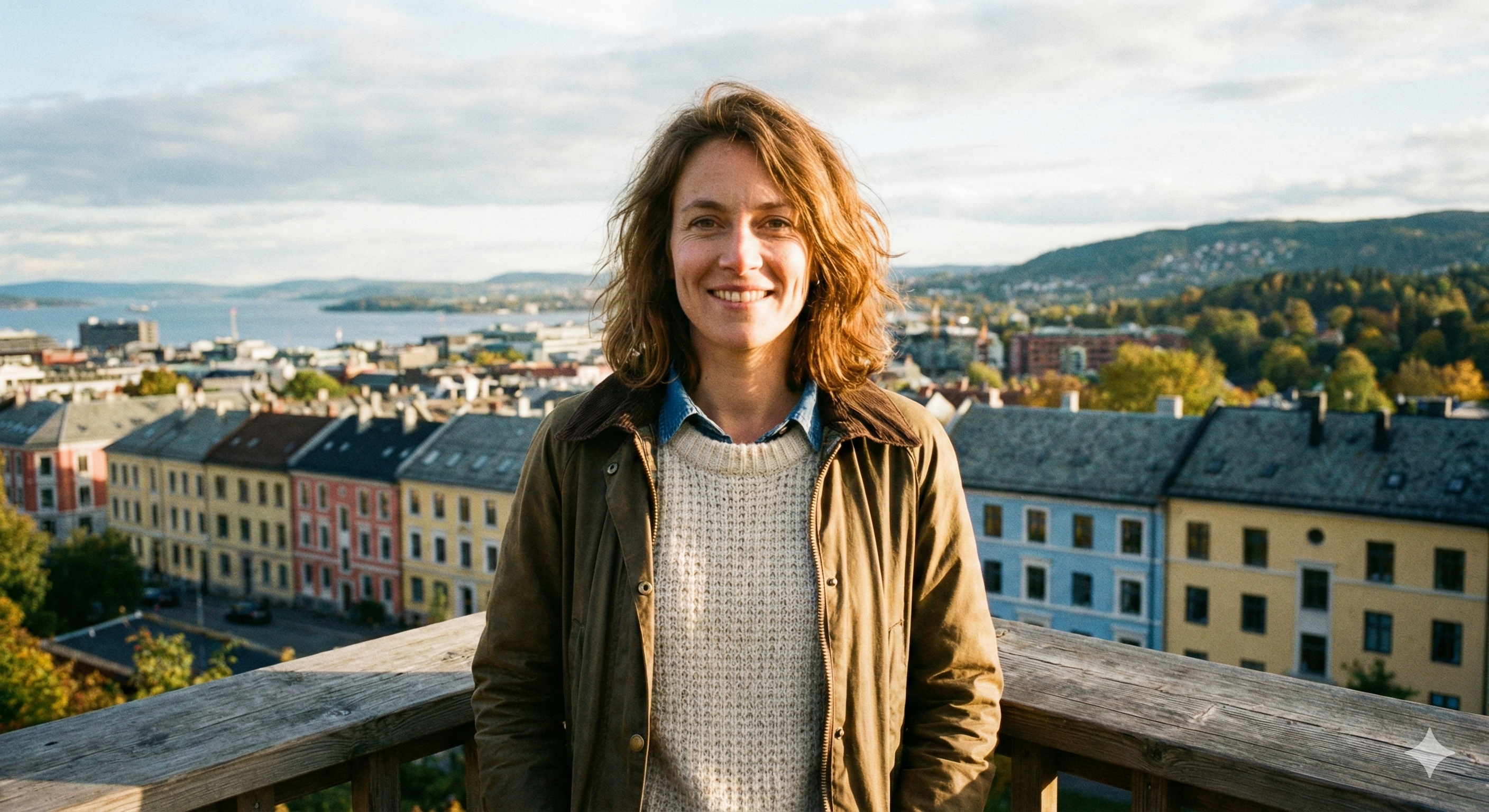
"When we arrived in Oslo 7 years ago, my two children were 2 and 5. Education was my biggest worry. Today they are perfectly bilingual and thriving in the Norwegian system. I'm sharing everything I've learned to help you make the right choices."
-- Ingrid
The Norwegian education system: an overview
The Norwegian education system is one of the most highly regarded in the world. Founded on the principles of equality, inclusion and child wellbeing, it differs considerably from the British and American systems. Norway spends around 7% of its GDP on education, one of the highest rates among OECD countries.
The Norwegian school path is divided into several stages:
- Barnehage (nursery/preschool): ages 1 to 5 -- not compulsory, but attended by 97% of children
- Barneskole (primary school): ages 6 to 12 (years 1 to 7)
- Ungdomsskole (lower secondary school): ages 13 to 15 (years 8 to 10)
- Videregående skole (upper secondary school): ages 16 to 18 (3 years) -- not compulsory
- Higher education: universities and høgskole (university colleges)
Schooling is compulsory from age 6 to 16 in Norway (10 years of grunnskole). There is no compulsory schooling before 6 (no reception year as in England): the Norwegian barnehage remains optional. However, almost all children attend, and the government guarantees a place for every child from the age of 1.
The major differences from the UK and US systems
If you are arriving from abroad, several aspects of the Norwegian system will surprise you:
- No grades before year 8 (age 13): pupils are assessed through written comments, not numbers -- no equivalent of SATs, GCSE-style testing pressure or standardised state tests in the early years. The aim is to preserve the child's intrinsic motivation.
- An emphasis on play and nature: children spend a lot of time outdoors, even in winter. Learning through play is central until age 7-8.
- Shorter days: school generally finishes between 1 pm and 2:30 pm for the youngest, with after-school care (SFO) available afterwards.
- Very little homework: especially in primary school, the philosophy is that the child learns at school and lives their life at home.
- Total equality: no rankings, no streaming or setting by ability, no "gifted" tracks. Each child progresses at their own pace.
- A later start: school starts at 6, compared with 4-5 in UK reception and 5-6 in US kindergarten.
At first, the absence of grades bothered me a lot. How could I tell whether my son was making progress? But I quickly understood that the regular meetings with the teacher were far more informative than a report card. And above all, my children love going to school. They have never had the anxiety about exams that I knew growing up in France -- and British and American friends here say the same about the testing culture back home.
-- IngridBarnehage: nursery and preschool (ages 1-5)
The barnehage (literally "children's garden") is the institution that looks after children aged 1 to 5. It is the equivalent of nursery and preschool combined. In Norway it is a true institution: 97% of children aged 3 to 5 are enrolled.
How does the barnehage work?
Norwegian barnehager are very different from UK nurseries or US daycare and preschools:
- Hours: generally from 7:30 am to 4:30 or 5:00 pm, Monday to Friday
- Age groups: children are split into "småbarn" (ages 1-3) and "storbarn" (ages 3-5)
- Staff-to-child ratio: 1 adult for 3 children (ages 1-3) and 1 adult for 6 children (ages 3-5)
- Activities: free play, outdoor activities (at least 2 hours a day), singing, crafts, trips into nature
- Meals: lunch and snacks are generally provided (included in the fee or for a modest supplement)
In Norway there are both municipal (public) and private barnehager. The maximum price is set by the State and is the same for both types. The main difference lies in the pedagogy: some private barnehager offer specific approaches (nature, music, Montessori, etc.). Municipal barnehager are generally very good too.
The right to a barnehage place
Since 2009, every child aged at least 1 before 1 December has a legal right to a barnehage place in their municipality. The main admissions take place in August/September, but it is possible to be admitted during the year if places become available.
The priority criteria are generally:
- Children with special needs
- Children already enrolled in the same barnehage (siblings)
- How long the application has been pending
Apply for your child as early as possible, ideally before 1 March for an August start. In Oslo, the most popular barnehager have long waiting lists. Our daughter got her place first time because we applied very early. For our son, we had to wait 3 months and take a barnehage that wasn't our first choice.
-- IngridA typical day at the barnehage
Arrival and free play
Children arrive gradually. Free play indoors, reunions with friends.
Samlingsstund (circle time)
A short gathering with songs, an introduction to the day and a register of the children.
Outdoor activities
Out in the yard or a trip to the nearby forest. Children play outside in all weathers, even at -10 degrees.
Lunch
A hot meal or open sandwiches (matpakke). Children often help with preparing and clearing up.
Nap / quiet activities
Naps for the youngest (often outdoors in their prams!), quiet activities for the older ones (reading, crafts).
Snack and free play
A fruit snack, then free play indoors or in the yard until pick-up.
The first time I saw my 18-month-old daughter nap outside in her pram, in the middle of January, at -5 degrees, I nearly had a heart attack! But it's a well-established Nordic tradition. The children are well wrapped up and sleep very well in the fresh air. After a few weeks, I noticed that she really did sleep better and fell ill less often.
-- IngridBarnehage, school, parental leave: all your rights in one chapter
Chapter 17 covers the rights of expat families in Norway: enrolment, 2026 costs, parental leave and the school system decoded.
Get the guide →Grunnskole: primary and lower secondary school (ages 6-15)
The grunnskole (basic school) is the compulsory 10-year common core that forms the heart of the Norwegian education system. It is divided into two parts: the barneskole (primary, years 1-7) and the ungdomsskole (lower secondary, years 8-10).
Barneskole: primary school (ages 6-12)
Norwegian primary school is a very different experience from UK primary or US elementary school:
- First year (age 6): essentially play and socialising. Formal learning of reading and writing really begins in year 2.
- Hours: 8:30 am-1:00 pm for years 1-4, 8:30 am-2:30 pm for years 5-7
- No grades: assessment is through detailed comments and parent-teacher meetings twice a year
- Subjects: Norwegian, mathematics, English (from year 1), natural sciences, social studies, arts, music, physical education, food and health
- Break time and outdoors: several breaks a day, with a strong emphasis on outdoor play
In Norway, there is no school canteen as there is in many countries. Children bring their matpakke (lunch box) every day, generally made up of wholemeal bread sandwiches with brown cheese (brunost), cold cuts or paté, accompanied by fruit and a yoghurt. It's a culture shock for many parents used to hot canteen meals!
Ungdomsskole: lower secondary school (ages 13-15)
The ungdomsskole covers the last three years of compulsory schooling:
- Grades appear: for the first time, pupils receive grades from 1 to 6 (6 being the best)
- Optional subjects: pupils choose a second foreign language (French, German or Spanish) or further study in Norwegian/English
- Hours: roughly 8:30 am-3:00 pm
- Final exam: a written or oral exam at the end of year 10 determines part of the points for upper secondary admission
My eldest son is currently in ungdomsskole. The switch to grades was a bit of a shock for him because he wasn't used to them. But the system remains caring: teachers focus heavily on individual progress rather than on comparison between pupils. If your child went to school in France beforehand, they will probably be ahead in maths, which is a good boost to their confidence.
-- IngridWelcoming foreign children
Norwegian municipalities are obliged to take in every school-age child, whatever their nationality or level of Norwegian. Here are the arrangements in place:
- Reception class (mottaksklasse/innføringsklasse): your child may be placed in a reception class to learn Norwegian intensively for 1 to 2 years
- Gradual integration: the child gradually joins regular lessons as their Norwegian improves
- Language support (morsmålsopplæring): mother-tongue teaching may be offered to ease the transition
- Personalised follow-up: each child benefits from an individual learning plan
Our son was 5 when we arrived and didn't speak a word of Norwegian. He was enrolled directly in barneskole with reinforced language support. After 6 months, he was chatting fluently with his classmates. Children learn incredibly fast through immersion! His little sister, who arrived at 2, learned Norwegian at the barnehage in just a few months.
-- IngridVideregående skole: upper secondary school (ages 16-18)
The videregående skole (literally "advanced school") is the equivalent of sixth form or high school. It is not compulsory, but 98% of young Norwegians continue their studies there. Since 1994, every young person aged 16 to 19 has a legal right to 3 years of upper secondary school.
The two main tracks
General track (Studieforberedende)
Prepares for higher education. Comparable to sixth form / A-levels in the UK or the college-prep track of a US high school. Includes specialisations: sciences, languages, economics, arts, music/dance/drama. Duration: 3 years.
Vocational track (Yrkesfag)
Trains for a specific trade. 2 years at school + 2 years of apprenticeship in a company. Highly valued in Norway, it leads to well-paid jobs (electrician, plumber, healthcare, etc.).
Unlike in many countries, where vocational tracks sometimes suffer from a negative image, they are very well respected in Norway. An electrician or plumber often earns more than 500,000 NOK a year (about $53,000 / £39,600). Norwegian society values all trades equally, so the choice between the general and vocational track is really made according to the pupil's interests, without social stigma.
Admission to upper secondary school
Admission to videregående skole is based on the grades obtained in ungdomsskole (years 8-10). Pupils list several schools and tracks as preferences and are admitted according to their overall average. In big cities like Oslo, competition for the most popular schools can be fierce.
Higher education: universities and colleges
Norway has a high-quality higher education system, with several universities appearing in the world rankings. One of the major advantages: public universities are free, even for foreign students (except non-EEA students at some institutions since 2023).
The main universities
| University | City | Recognised specialities |
|---|---|---|
| Universitetet i Oslo (UiO) | Oslo | Law, medicine, humanities |
| NTNU | Trondheim | Engineering, technology, sciences |
| Universitetet i Bergen (UiB) | Bergen | Marine sciences, geosciences, medicine |
| UiT -- The Arctic University of Norway | Tromsø | Arctic sciences, marine biology, Sámi law |
| NHH | Bergen | Business school, economics, finance |
| BI Norwegian Business School | Oslo | Management, marketing (private) |
Norwegian public universities do not charge tuition fees to EEA students. Only a semester fee of about 600-800 NOK (around $64–85 / £48–63) is required, giving access to student services and transport discounts. Since 2023, some universities have introduced fees for non-EEA students, but many master's programmes remain free.
Programmes in English
Many master's programmes and some bachelor's programmes are taught entirely in English, which makes them accessible to expats and international students. The most common fields in English are engineering, computer science, natural sciences, business and international relations.
International schools in Norway
For expat families who want educational continuity internationally, or who are only staying in Norway for a few years, international schools are an interesting option.
The main international schools
| School | City | Curriculum | Annual fees (approx.) |
|---|---|---|---|
| Oslo International School | Oslo (Bekkestua) | IB (International Baccalaureate) | 120,000 - 180,000 NOK |
| International School of Bergen | Bergen | IB | 90,000 - 140,000 NOK |
| International School of Stavanger | Stavanger | IB | 100,000 - 160,000 NOK |
| Trondheim International School | Trondheim | IB / bilingual Norwegian programme | 80,000 - 130,000 NOK |
| British International School of Stavanger | Stavanger | British curriculum | 110,000 - 170,000 NOK |
If you plan to stay in Norway long term, I really recommend the Norwegian school system over an international school. My children integrated far more quickly by being immersed in a 100% Norwegian environment. An international school is a good option if you already know you'll be leaving in 2-3 years, or if your child is in upper secondary and needs to sit the IB Diploma or A-levels.
-- IngridInternational and English-language schools, city by city
Beyond the big names above, there are English-language international schools in most Norwegian cities of any size. Most are fee-paying private schools that receive state support, so fees are usually far below those of private schools in the UK or the US.
Where to find them
- Oslo area: Oslo International School (Bekkestua), British School of Oslo (English National Curriculum, IGCSE/A-levels, opened 2023), Northern Lights International School, Asker International School
- Bergen: International School of Bergen (IB)
- Stavanger/Sandnes: International School of Stavanger (Hafrsfjord) and British International School of Stavanger
- Trondheim: Trondheim International School and Birralee International School
- Tromsø: Tromsø International School (IB PYP/MYP, near the UiT campus)
- Southern Norway: Kristiansand International School, Arendal International School (IB), Skagerak International School in Sandefjord (IB, including the Diploma Programme) and Tønsberg, International School Telemark in Porsgrunn
- Elsewhere: Ålesund International School, Haugesund International School, CIS Fredrikstad, CIS Moss, Kongsberg International School, Gjøvik Region International School, Fagerhaug International School (Stjørdal); Bodø International School was approved in 2023 -- check its current status
Oslo also has a German School and a French School (Lycée français René Cassin) for families who want those national curricula.
IB or English National Curriculum?
| Programme | Stages | Where you'll find it |
|---|---|---|
| IB Primary Years Programme (PYP) | Ages ~3-12 | Most international schools in Norway |
| IB Middle Years Programme (MYP) | Ages ~11-16 | Most international schools in Norway |
| IB Diploma Programme | Ages 16-19, recognised by universities worldwide | Only a few schools (e.g. Oslo, Bergen, Stavanger, Sandefjord) |
| English National Curriculum (IGCSE / A-levels) | Key Stages, IGCSE at 16, A-levels at 18 | The British schools in Oslo and Stavanger |
| American-style curriculum | No dedicated US-curriculum school; families usually choose IB | IB schools are widely accepted by US universities |
Because most international schools receive state funding, fees outside Oslo are often in the tens of thousands of NOK a year, while Oslo schools cost more. Waiting lists can be long in Oslo and Stavanger, so contact schools as soon as your move is confirmed, and check whether your employer contributes to school fees -- many relocation packages do.
We hesitated for a long time between a Norwegian state school and an international school. In the end, we chose the Norwegian system because we wanted our children to integrate fully, and it was the right call for us. If you are English-speaking, your children won't lose their English: it is taught from year 1 and films and TV are shown in the original version. An international school makes more sense if you are only staying 2-3 years, if your child is a teenager who needs an IB Diploma or A-levels, or if you know you'll move back to the UK or the US.
-- IngridLearning Norwegian (norskkurs)
Learning Norwegian is a central part of integration in Norway, for children and parents alike. The Norwegian government offers many free or subsidised programmes.
For children
Children in the Norwegian system automatically receive language support:
- At the barnehage: total immersion is the main method. Children learn naturally by playing with their friends. Some municipalities offer extra hours of Norwegian support for children whose first language isn't Norwegian.
- At primary and lower secondary school: pupils who don't have a sufficient command of Norwegian are entitled to adapted teaching (særskilt norskopplæring). This can take the form of reinforced Norwegian lessons, reception classes, or bilingual support.
For parents
Expat parents have several options for learning Norwegian:
- Compulsory norskkurs (for some residents): non-EEA nationals must complete 300 hours of Norwegian lessons and 50 hours of lessons on Norwegian society, funded by the State
- Voluntary norskkurs: EEA nationals can take Norwegian lessons at their municipality's adult education centres (voksenopplæring), often at a reduced rate or free
- Private lessons: schools such as Alfaskolen, Folkeuniversitetet or Lingu offer intensive courses (around 3,000-8,000 NOK per term)
- Apps and online resources: Duolingo (Norwegian), NRK Norskkurs (free), University of Oslo's "Norwegian on the Web" (free)
Learn Norwegian! Even though many Norwegians speak very good English, speaking Norwegian completely changes your experience. Parent-teacher meetings, conversations with teachers, invitations to friends' birthday parties... everything happens in Norwegian. It took me 2 years to feel truly comfortable, but the investment is worth it a thousand times over.
-- IngridSFO: after-school care
The SFO (Skolefritidsordning, literally "school leisure-time arrangement") is the after-school care offered to pupils in years 1 to 4 (ages 6-10). For children with special needs, SFO is available up to year 7.
How does the SFO work?
- Hours: before school (generally from 7:30 am) and after school (until 4:30 or 5:00 pm)
- Activities: free play, sports, creative arts, outings in nature. The SFO is not an extension of school: there is no supervised homework and no formal teaching.
- Meals: a snack is generally provided
- Enrolment: the SFO is run by the municipality or the school. You enrol through your child's school.
Since 2022, the Norwegian government has made the SFO free for year 1 pupils (12 hours a week). This measure has been extended gradually. For later years, the SFO remains paid but the fee is capped by the municipality.
The SFO was essential for us in the early years. With school finishing at 1 pm for the little ones, it's impossible to work full time without the SFO. Our son did lots of fun activities there: cooking, trips to the forest, group games. It's a really important place for socialising and the children love going.
-- IngridCost of education in Norway
One of the great advantages of the Norwegian system is the relatively modest cost of education, thanks to State subsidies. Here is a complete summary of the costs to expect.
The Norwegian public system
| Type | Monthly cost (NOK) | Equivalent ($ / £) | Comment |
|---|---|---|---|
| Barnehage (nursery/preschool) | 3,315 NOK max | ~$350 / £265 | Fee capped by the State, same for public/private |
| Grunnskole (primary + lower secondary) | Free | $0 / £0 | Textbooks and materials provided |
| SFO (year 1) | Free (12 hrs/week) | $0 / £0 | Since 2022 |
| SFO (years 2-4) | 2,000 - 3,500 NOK | ~$210–370 / £160–275 | Varies by municipality and the hours chosen |
| Videregående skole (upper secondary) | Free | $0 / £0 | Textbooks may be paid for by the pupil |
| Public university | ~600-800 NOK/semester | ~$64–85 / £48–63 | Student fee only |
Discounts and financial aid
- Siblings in barnehage: 30% discount for the second child, then 50% from the third child enrolled in the same barnehage
- Low income: families earning below a certain threshold (around 615,590 NOK/year in 2024) can benefit from a reduced fee or even free barnehage
- 20 free hours of barnehage: for children aged 2 to 5 from low-income families
- Lånekassen: the national student loan and grant fund offers favourable loans and grants for higher education
Maximum barnehage fee in Norway per child -- among the lowest in Europe for a service of this quality
For our two children (one in barneskole with SFO, one who has just finished barnehage), we currently pay about 3,200 NOK a month in total. That's far less than British and American friends pay back home, where nursery or daycare often costs £1,000-£1,500 / $1,200-$2,500 a month per child. And school is entirely free, textbooks included! It's a real financial relief for families.
-- IngridEnrolment and procedures
Enrolment procedures vary depending on the type of school. Here is a step-by-step guide for each situation.
Enrolling in barnehage
Look up the available barnehager
Check your municipality's website for the list of barnehager (public and private) in your area. Visit several if you can to compare the atmosphere and the pedagogy.
Submit your application online
Applications are made on the municipality's portal. You can list several barnehager in order of preference. The deadline for an August start is generally 1 March.
Receive the offer and confirm
You receive an offer of a place, which you must accept or decline within one to two weeks. If you decline, you lose your priority.
Settling-in period (tilvenning)
For the first few days, you stay with your child at the barnehage to help them settle in. This period generally lasts 3 to 5 days and is very well supported by the staff.
Enrolling in grunnskole (compulsory school)
Enrolment in a public school is automatic and handled by the municipality:
- Your child is enrolled at your catchment-area school (nærskole) based on your home address
- You receive a letter from the municipality in the spring before the August start
- If you arrive during the year, contact the municipality directly and it will assign you a school
- Documents needed: the child's fødselsnummer, proof of address, passport
School year calendar
Start of the school year
The school year starts between 15 and 20 August depending on the municipality.
Autumn break (høstferie)
A week's holiday, generally in week 40 or 41.
Christmas holidays (juleferie)
About two weeks, including Christmas and New Year.
Winter break (vinterferie)
One week, the ideal opportunity for family skiing!
Easter holidays (påskeferie)
From Palm Sunday to Easter Monday. Traditionally, Norwegians head off to their cabin (hytte) in the mountains.
Summer holidays (sommerferie)
About 8 weeks of summer holiday -- longer than the ~6 weeks in the UK, shorter than the ~10-11 weeks common in the US.
17 May (Norwegian National Day) is a very special day for schoolchildren. Each school organises its own parade through the streets, the children wear the bunad (traditional costume) or their finest clothes, and the day is filled with games, ice cream and hot dogs. It's an unforgettable moment! My children start talking about it as early as March.
-- IngridFrequently asked questions
Yes, absolutely. The municipality is obliged to take in your child and provide suitable language support. Depending on age and level, your child will be placed in a reception class (innføringsklasse) or directly in a regular class with reinforced support. Children generally learn Norwegian in 6 months to 1 year through immersion.
Compulsory school (grunnskole) begins in the year the child turns 6. Children born between 1 January and 31 December of the same year form one class. There is no possibility of skipping a year or starting early, and no reception year at 4 as in the UK.
In primary school, homework is very light or even non-existent. A little daily reading and perhaps a few maths exercises, but rarely more than 15-20 minutes. In lower secondary (ungdomsskole), homework gradually increases but remains moderate compared with UK secondary schools or US middle and high schools. The Norwegian philosophy is that children should have free time to play and be with their family.
Repeating a year barely exists in Norway. All pupils move up with their age group. If a pupil is struggling, individualised support is put in place. This approach is common in the UK too, but it can surprise American parents used to "holding back"; it avoids stigmatisation and lets each child progress at their own pace with the support they need.
Yes. The simplest option is an international school (IB) or one of the British schools in Oslo and Stavanger (English National Curriculum). Some families instead keep their child in a Norwegian school and add an accredited UK or US online school part time, to stay on track for a possible return home. That is a significant extra workload for the child, though. For English itself you rarely need to worry: it is taught from year 1 and children hear it constantly through films, TV and games.
In Norwegian public schools, almost all school materials are provided free by the school: textbooks, exercise books, pencils, etc. You simply need to provide a school bag (sekk) and the lunch box (matpakke). A pleasant surprise for American parents used to long back-to-school supply lists!
The subject KRLE (Kristendom, Religion, Livssyn og Etikk) is part of the compulsory curriculum. It covers Christianity, the other world religions, philosophy and ethics. It is cultural, non-confessional teaching. It is not possible to opt out, but the approach is neutral and informative.
In Norway, children generally get to school on foot, by bike or by public transport, even from the first year. If the distance is more than 2 km (for the youngest) or 4 km (for older pupils), the municipality arranges free school transport. Independence in children is highly valued in Norwegian culture.
Questions about your children's education in Norway?
Find my ideal city