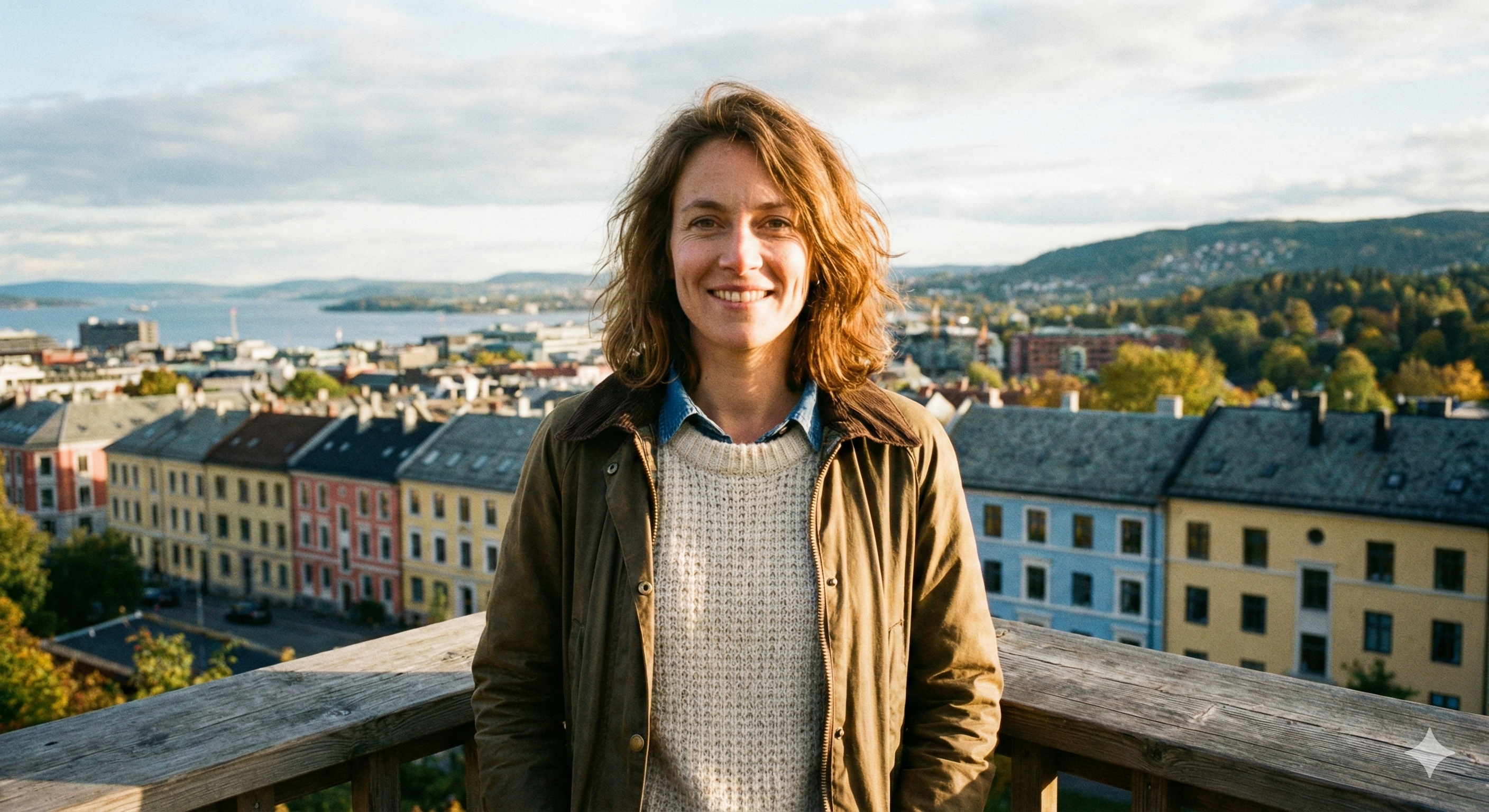
"Bodø literally captivated me on my first visit. This small town above the Arctic Circle has transformed spectacularly by becoming European Capital of Culture 2024. Today it hums with new energy, with the midnight sun in summer, the northern lights in winter, and the Lofoten within ferry reach. Bodø is proof that a small Arctic town can think big."
— Ingrid
Why Bodø?
Bodø is the capital of the Nordland region and the second-largest city in northern Norway after Tromsø. Located just north of the Arctic Circle, it is the gateway to the legendary Lofoten Islands and the starting point of some of the country's most beautiful coastal roads. With its 53,000 inhabitants, Bodø is a very human-scale town that has undergone a remarkable transformation in recent years.
Bodø's designation as European Capital of Culture 2024 was a historic turning point. It was the first time such a small and northerly city had received this prestigious title. The event generated massive investment in cultural infrastructure, public spaces and artistic life, leaving a lasting legacy that continues to energise the city well beyond 2024.
Bodø also offers a unique natural phenomenon: the Saltstraumen, the most powerful tidal current in the world, only 30 minutes from the town centre. Add the midnight sun from late May to mid-July, the northern lights in winter and a booming cultural scene, and you get an expat destination like no other.
+ Pros
- European Capital of Culture 2024: a lasting legacy of infrastructure and events
- Gateway to the Lofoten Islands (ferry and road)
- Midnight sun from late May to mid-July
- Spectacular northern lights from September to March
- Saltstraumen: the most powerful tidal current in the world
- Booming, fresh cultural scene
- Nord University: a dynamic university hub
- Relatively mild climate for a city above the Arctic Circle (Gulf Stream effect)
- Cons
- Dark winters with polar night in December
- Remote location, far from Norway's big cities
- Limited, not very diverse job market
- Expensive flights to southern Norway and Europe
- Very small town: limited shopping and cultural offering despite recent progress
Bodø was almost entirely destroyed by the bombing of 1940 during the Second World War. The city was rebuilt in a 1950s functionalist style, which gives it an architecture unique in Norway. With its title of European Capital of Culture 2024, Bodø has turned this history into a story of resilience and cultural renewal, blending post-war architectural heritage with bold contemporary creations.
Where to live in Bodø?
Bodø is a compact city that is easy to navigate. The town centre sits on a peninsula facing the sea, with residential neighbourhoods stretching south and east. Most services and shops are accessible on foot or by bike from the centre. Here are the five main neighbourhoods to know:
Sentrum (City centre)
The heart of Bodø, compact and convenient. All the shops, restaurants, the harbour and the new cultural infrastructure from the European Capital of Culture are here. Ideal for those who want to do everything on foot and enjoy Bodø's urban life.
Mørkved
A university district home to the main Nord University campus. Young, student atmosphere, with more affordable housing. Well connected to the centre by bus. There are also local shops and sports facilities.
Hunstad
Bodø's family neighbourhood par excellence. Quiet residential areas with detached houses and small apartment buildings, nearby schools, playgrounds and easy access to the surrounding nature. Very popular with families with children.
Tverlandet
A fast-growing suburban area south-east of Bodø. A very quiet living environment surrounded by nature, with more affordable property prices. You need a car for daily travel, but it offers more living space.
Rønvik
A residential neighbourhood north of the centre, close to the Nordlandssykehuset hospital. Peaceful atmosphere with a mix of older houses and recent buildings. Well located between the town centre and the coastal natural areas.
Bodø is small enough that you can live in any neighbourhood and still reach the centre easily. If you are arriving alone or as a couple, I recommend Sentrum to enjoy the new cultural infrastructure and the harbour atmosphere. With a family, Hunstad is the most popular choice thanks to its schools and green spaces. The rental market is less tight than in Oslo or Tromsø, but good homes go fast on Finn.no. Start your search 1 to 2 months before you arrive. A small bonus: rents in Bodø are noticeably lower than in Norway's big cities.
— IngridCost of living in Bodø
Bodø is cheaper than the big cities of southern Norway, notably for housing. However, some costs are higher because of the remoteness: food is slightly more expensive than in Oslo because of goods transport, and flights to southern Norway or Europe are a significant expense. On the other hand, the town is compact enough to keep everyday transport costs down.
| Expense | Single | Couple | Family (2 children) |
|---|---|---|---|
| Housing | 9,000 NOK | 12,000 NOK | 15,000 NOK |
| Food | 4,000 NOK | 6,200 NOK | 9,800 NOK |
| Transport | 600 NOK | 1,200 NOK | 1,200 NOK |
| Leisure | 2,000 NOK | 2,800 NOK | 3,500 NOK |
| Heating (winter supplement) | 700 NOK | 900 NOK | 1,100 NOK |
| Other | 1,200 NOK | 1,900 NOK | 2,900 NOK |
| TOTAL | ~17,500 NOK (~$1,860 / £1,390) |
~25,000 NOK (~$2,650 / £1,980) |
~33,500 NOK (~$3,550 / £2,650) |
Bodø's bus network (Nordland fylkeskommune) is limited but sufficient for everyday trips. The monthly pass costs around 600 NOK. Many residents get around on foot or by bike, even in winter. Plan a sizeable travel budget if you want to go back home regularly or visit southern Norway: a Bodø-Oslo return flight costs between 1,500 and 3,500 NOK depending on the period.
For groceries, favour the Rema 1000 and Kiwi supermarkets, which have the lowest prices. Fresh fish is paradoxically cheaper here than in the south thanks to the proximity of the fishing grounds. In summer, make the most of local markets for fresh produce. And for flights, book early with Norwegian or Widerøe: prices vary enormously depending on when you book.
— IngridWorking in Bodø
The job market in Bodø is smaller than in Norway's big cities, but it offers real opportunities in certain key sectors. As the capital of Nordland, the town concentrates a significant share of the regional administration. Norwegian is almost essential for most jobs, except in academia and some tourism-related companies.
Sectors that are hiring
- Public administration: Bodø is the seat of Nordland fylkeskommune (regional administration) and many public institutions. The town employs a large number of civil servants in administration, urban planning and public services. It is the region's largest employer.
- Education and research (Nord University): Nord University, whose main campus is in Bodø (Mørkved district), is a major employer. The university regularly recruits lecturers and researchers, doctoral students and administrative staff in varied fields: business, aquaculture, social sciences, sport and education.
- Fishing and aquaculture: Nordland is one of Norway's most important regions for salmon farming and traditional fishing. Several companies in the sector have their headquarters or major facilities around Bodø, offering jobs in production, research and management.
- Tourism: As the gateway to the Lofoten, Bodø benefits from fast-growing tourism. Hotels, excursion companies, tour guides and related services are recruiting, especially in high season (June-September). The legacy of the European Capital of Culture 2024 has also strengthened cultural tourism.
- Aviation: Bodø airport is an important regional hub for northern Norway. Widerøe, the regional airline, maintains an operating base there. The aviation sector and related services offer jobs in logistics, maintenance and administration.
Average salaries in Bodø
| Job | Annual gross salary |
|---|---|
| Civil servant (regional administration) | 480,000 - 650,000 NOK |
| Lecturer-researcher (Nord University) | 550,000 - 750,000 NOK |
| Aquaculture engineer | 520,000 - 720,000 NOK |
| Nurse (Nordlandssykehuset) | 450,000 - 580,000 NOK |
| Tour guide / tourism manager | 350,000 - 500,000 NOK |
If Bodø is your target, start by looking for positions at Nord University (on jobbnorge.no) and in the Nordland administration. These are the most stable employers and the most open to international profiles. In aquaculture, companies such as Cermaq and Nova Sea regularly recruit engineers and technicians. Remote work is also an increasingly popular option: some expats work for Oslo companies while enjoying Bodø's exceptional quality of life. Also think about starting a business in tourism: with the Lofoten next door, there is no shortage of opportunities.
— IngridSchools and nurseries
Bodø has a complete education network despite its modest size. Public education is free and of good quality. For now, most expat children go through the Norwegian education system in full immersion. A private English-language school, Bodø International School, was approved in 2023 with an opening planned for autumn 2025: check its current status before you move.
Nord University
Nord University is the town's main higher-education institution. Its Mørkved campus welcomes around 6,000 students and offers programmes in business, aquaculture, nursing, sport, education and social sciences. The university offers several programmes in English at master's and doctoral level, and is an interesting entry point for expats wishing to study or work in academia.
Primary and secondary schools
- Bodø public schools: The municipality runs around fifteen primary schools (barneskole, years 1 to 7) and several lower secondary schools (ungdomsskole, years 8 to 10). Children who do not speak Norwegian benefit from language reception programmes (innføringsklasse) to ease their integration.
- Bodø videregående skole: The town's main upper secondary school, offering general and vocational pathways. It welcomes pupils from across the Nordland region.
- Bodin videregående skole: Another important upper secondary school, specialising in certain vocational and sports tracks.
Nurseries (Barnehage)
Bodø has many municipal and private nurseries. The maximum fee is capped by the state at around 3,000 NOK per month for the first child, with reductions for subsequent children. Registration is generally done online via the Bodø kommune website, with a main registration period in March for a start in August. Unlike Oslo, places are generally easier to get.
SFO (Skolefritidsordning)
SFO is the after-school care service for children in years 1 to 4 (ages 6-10). It runs before and after school hours as well as during some school holidays. The monthly fee ranges between 2,200 and 3,000 NOK depending on the number of hours chosen.
Having few or no international school places in Bodø may look like an obstacle, but it is actually a blessing in disguise for your children's integration. Immersed in the Norwegian system from the start, they learn the language much faster and make local friends. The reception programmes (innføringsklasse) are well thought out and support the transition effectively. English-speaking children keep up their English easily: it is taught from year 1, and TV and films are shown in the original version. And Nord University is a great option for young adults who want to continue their studies locally.
— IngridWhat to do in Bodø?
Bodø offers a range of activities that is surprising for a town of this size. Between Arctic natural phenomena, the proximity of the Lofoten and the cultural legacy of 2024, life in Bodø is anything but dull. Nature and adventure lovers will find an exceptional playground.
Unique natural experiences
- Saltstraumen: Located about 30 km from Bodø, the Saltstraumen is the most powerful tidal current in the world. Four times a day, up to 400 million cubic metres of water rush through a strait 150 metres wide, creating spectacular whirlpools. It is an absolutely unique natural spectacle that you can watch from the bridge or on boat trips.
- Lofoten excursions: The Lofoten are reachable by ferry from Bodø (3 hours to Moskenes) or by road. These islands with breathtaking landscapes are one of Norway's most iconic destinations. Living in Bodø means having the Lofoten as your weekend playground.
- Midnight sun: From late May to mid-July, the sun does not set in Bodø. The endless evenings, midnight hikes and permanent golden light create a unique, energising atmosphere.
- Northern lights: From September to March, Bodø offers excellent conditions for watching the northern lights. Low light pollution and a clear horizon to the north make it a top spot.
Hiking and outdoors
- Keiservarden: Bodø's emblematic hike. This summit at 366 metres above sea level offers a spectacular panoramic view of the town, the coast, the offshore islands and, in clear weather, the Lofoten on the horizon. Reachable in about 1h30 from the town centre, it is a must.
- Børvatnet: A lake a few kilometres from the centre, popular for swimming in summer, ice skating in winter and walks all year round. A relaxing spot loved by families.
- Skiing and winter sports: The Keiservarden ski area and the surrounding mountains offer opportunities for downhill skiing and ski touring. Cross-country skiing is possible on marked trails in and around the town.
- Kayaking and water activities: Exploring the Nordland coast by kayak is a memorable experience, with waters rich in marine life and wild coastal landscapes.
Culture and heritage
- European Capital of Culture 2024 legacy: Bodø 2024's cultural programme left a considerable legacy: new cultural spaces, permanent art installations, artist residency programmes and an enriched calendar of cultural events that continues year after year.
- Nordlandsmuseet: The Nordland museum traces the region's history from the Viking Age to today. Exhibitions on traditional fishing, Sami culture and post-war reconstruction give a fascinating insight into northern Norwegian identity.
- Bodøgaard Gallery: A contemporary art space in a historic building, with regular exhibitions by local and international artists.
- Festivals: Nordland Musikkfestuke (classical music festival), Parkenfestivalen (open-air pop/rock music festival) and many events inherited from the 2024 programme enliven the town throughout the year.
If you only do one thing in Bodø, climb to the top of Keiservarden on a June evening under the midnight sun. The golden light bathing the coast, the islands in the distance and the sea as far as the eye can see... it is one of the most beautiful panoramas I have seen in Norway. And in winter, go and watch the Saltstraumen at high tide: the raw power of nature in its purest form, a spectacle that takes your breath away. Bodø is also the ideal starting point for a weekend in the Lofoten. Take the ferry early in the morning; the scenery from the boat is already extraordinary.
— IngridClimate in Bodø
Bodø has an oceanic Arctic climate, markedly softened by the Gulf Stream compared with other cities at the same latitude. Winter temperatures generally stay moderate (around -2°C on average in January), and summers are cool but pleasant (14°C on average in July). The wind, however, is a constant in Bodø: the town is known for its gusts, especially in autumn and winter.
The seasons in Bodø
- Winter (November-February): Cold but rarely freezing thanks to the Gulf Stream. Snow is frequent but does not always build up because of thaws. The polar night (mørketid) sets in in December: the sun does not rise above the horizon for about two weeks. The shortest days offer only a few hours of bluish twilight.
- Spring (March-May): The light returns quickly. March already brings 10 to 12 hours of daylight. The snow melts gradually and nature comes back to life. It is a period full of energy when residents emerge from winter torpor.
- Summer (June-August): The midnight sun lights up Bodø from late May to mid-July. Temperatures range between 10 and 18°C, with exceptional days at 20°C and above. It is the busiest season of the year, with an energy and brightness that completely transform the town.
- Autumn (September-October): Days shorten quickly. The first northern lights appear as early as September. The autumn colours in the surrounding mountains are superb. The wind picks up, heralding the winter storms.
The wind is Bodø's real challenge, more than the cold. Invest in good windproof jackets and quality thermal layers. Norwegians say there is no bad weather, only bad clothes, and that is particularly true in Bodø. For the polar night, buy a light therapy lamp as soon as you arrive: it makes all the difference. And make the most of the midnight sun in summer; it is a magical experience that more than makes up for the dark months.
— IngridDecember: Polar night, about 0 hours of direct sun for 2 weeks. January: The sun returns briefly, 1-3 hours of light. February-March: 6-12 hours of light, days lengthening fast. April-May: 16-22 hours of light. June-July: Midnight sun, 24 hours of light. August-September: 14-18 hours of light. October-November: 5-10 hours of light, rapid twilight.
International & English-speaking community in Bodø
Bodø's international community is small but gradually growing, notably thanks to researchers and students drawn to Nord University and expats attracted by the town's unique quality of life. If you are looking for a large, structured expat scene, Bodø is not the right choice. But if you are ready to fit into a small but warm international community, you will be pleasantly surprised.
- Bodø international community: Although small, Bodø's international community has grown stronger with the European Capital of Culture programme, which attracted artists and professionals from all over Europe. International events are organised from time to time.
- Nord University: The university welcomes international students and researchers from many countries. The university's international office organises welcome events and social activities that make integration easier.
- Online groups: Search Facebook for "Expats in Bodø" or "Internationals in Bodø" to find local groups. They are a good starting point for asking questions and finding contacts. The library and the Red Cross also run language cafés (språkkafé).
- Embassies: Most English-speaking countries (UK, US, Canada, Ireland) have their embassy in Oslo; check your government's travel site for consular services.
- Norwegian courses: Bodø voksenopplæring (adult education centre) offers Norwegian courses for foreigners, which are essential for local integration. Nord University also offers intensive Norwegian courses.
In Bodø, forget the idea of sticking with other expats: there simply aren't many of them. That is actually a huge advantage for integration. Join a local sports club (hiking, skiing, climbing) or take part in the town's cultural events. The people of Bodø (Bodøværinger) are welcoming and curious about foreigners, especially in a town this size where everybody ends up knowing everybody. Learn Norwegian as quickly as possible: it is the absolute key to fitting in in Nordland. And don't hesitate to take part in dugnad activities (collective volunteer work) in your neighbourhood; it is the best way to earn your neighbours' respect and friendship.
— IngridBodø is a place where mastering Norwegian is particularly important. Unlike Oslo, where English is often enough in daily life, here Norwegian is essential in most professional and social contexts. The Nordland dialect (nordlandsdialekt) can be surprising at first, even if you have learned standard bokmål, but locals will be delighted to help you understand local expressions. Bodø's public library organises free language cafés, an excellent way to practise in a relaxed atmosphere.
Questions about Bodø?
Find my ideal city