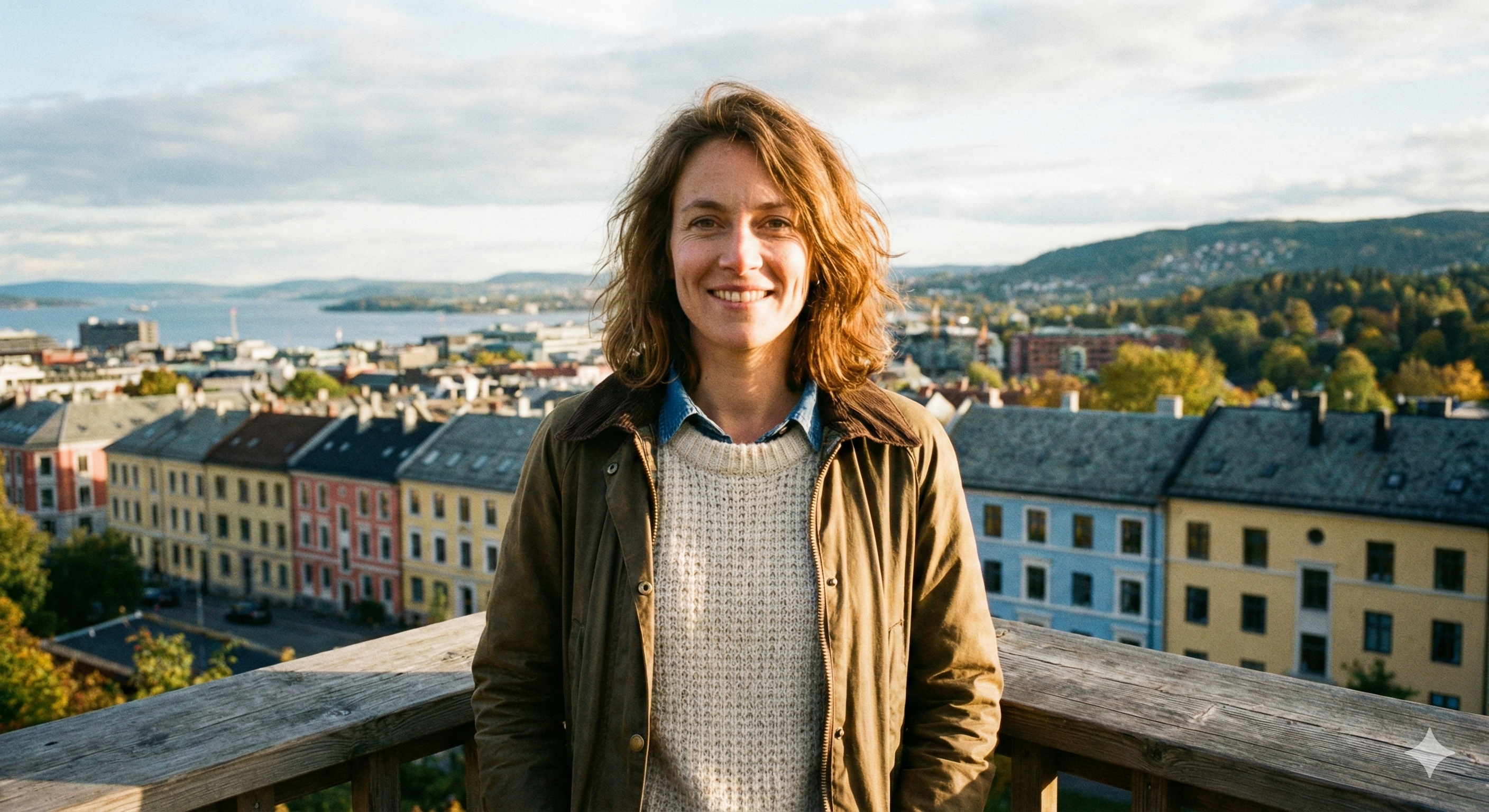
"Fredrikstad is a real favourite of mine. The fortified old town, Gamlebyen, is the best preserved in all of Scandinavia. You walk between the ramparts, the cannons and the cobbled lanes feeling as if you were in the 17th century. And the best part is that this city full of history remains one of the most affordable in Norway. For families who want to live comfortably without breaking the bank, it is a remarkable choice."
— Ingrid
Why Fredrikstad?
Fredrikstad is a city in south-eastern Norway, in the former province of Østfold (now part of Viken). Founded in 1567 by King Frederick II, it is built on both sides of the Glomma, Norway's longest river. Its main asset is undoubtedly Gamlebyen, the fortified old town, considered the best-preserved fortress town in all of Scandinavia.
Unlike Norway's big cities such as Oslo or Bergen, Fredrikstad offers a peaceful, authentic way of life with a markedly lower cost of living. Its strategic location, only an hour by train from Oslo and close to the Swedish border, makes it an ideal base for those looking for a compromise between urban life and tranquillity. The city is also the gateway to the Hvaler archipelago, an island paradise at sea.
Fredrikstad was long an industrial and port town, but it is gradually transforming. New residential districts are appearing along the river, the centre is being revitalised with art galleries and cafés, and a vibrant street art scene is redrawing the urban landscape. It is a city in full renewal, attracting more and more families looking for quality of life.
+ Pros
- Gamlebyen: the most beautiful fortified town in Scandinavia
- Cost of living and housing very affordable for Norway
- Close to Sweden (good-value shopping in Strömstad)
- 1 hour from Oslo by train (Østfoldbanen line)
- Hvaler archipelago: beaches, nature and water activities
- Rich historical and cultural heritage
- Human-scale city, ideal for families
- Cons
- Smaller job market than in the big cities
- Seen as provincial by some Norwegians
- Limited cultural and nightlife offering
- Industrial past visible in some neighbourhoods
- Less international diversity than Oslo or Stavanger
Where to live in Fredrikstad?
Fredrikstad is split in two by the Glomma: the west bank (Vestsiden) with the modern city centre, and the east bank (Østsiden) with Gamlebyen and the residential neighbourhoods. A free ferry service links the two banks in a few minutes. Here are the five most interesting neighbourhoods to settle in.
Gamlebyen (Old Town)
The historic fortified town on the east bank of the Glomma. Cobbled lanes, ramparts, art galleries and charming restaurants in a setting unique in Scandinavia. A place full of character, with a village and tourist atmosphere in summer.
Sentrum / Vestsiden (City centre)
Fredrikstad's modern centre on the west bank. Shops, restaurants, cinema and railway station. It is the administrative and commercial heart of the city, with recent apartments along the river.
Kråkerøy
An island linked to the city by a bridge, between the Glomma and the fjord. Exceptional natural environment, coastal paths and views over the archipelago. A popular family neighbourhood with good schools and direct access to Hvaler.
Sellebakk / Gressvik
Quiet residential neighbourhoods on the south-west bank. Detached houses, gardens, forests nearby. A peaceful atmosphere and good value for money for families seeking tranquillity.
Lisleby
A former industrial district undergoing transformation along the Glomma. Prices are still the lowest in the city, and new residential projects are appearing. A neighbourhood to watch for small budgets.
If you work in Oslo and plan to commute by train, settle near Fredrikstad station, on the Sentrum/Vestsiden side. The journey takes around 1h10 and the train is comfortable. For families, Kråkerøy is my favourite: you live between the river and the sea, children can cycle safely, and in summer you dash off to Hvaler in a few minutes. Gamlebyen is beautiful but the homes available there are rare and often old. Also consider Lisleby if your budget is tight: it is a neighbourhood that will change a lot in the coming years.
— IngridCost of living in Fredrikstad
This is one of Fredrikstad's great advantages: the cost of living is noticeably lower than in Oslo, Bergen or Stavanger. Rents are particularly competitive, and everyday prices (food, transport) stay at the lower end of the national average. The proximity of the Swedish border also lets you shop in Strömstad, where some products are cheaper.
| Expense | Single | Couple | Family (2 children) |
|---|---|---|---|
| Housing | 8,500 NOK | 11,000 NOK | 14,500 NOK |
| Food | 3,500 NOK | 5,500 NOK | 8,000 NOK |
| Transport | 700 NOK | 1,200 NOK | 1,500 NOK |
| Leisure | 1,500 NOK | 2,000 NOK | 2,500 NOK |
| Other | 1,300 NOK | 1,800 NOK | 2,000 NOK |
| TOTAL | ~15,500 NOK (~$1,640 / £1,230) |
~21,500 NOK (~$2,280 / £1,700) |
~28,500 NOK (~$3,020 / £2,260) |
Many Fredrikstad residents do their shopping in Sweden, in Strömstad or Nordby, 30-40 minutes away by car. Meat, cheese, drinks and toiletries are found there at much lower prices. On Saturday mornings, the queue of Norwegian cars at the border is a regional classic. Bring a cool bag and a well-prepared list.
If you commute to Oslo, the monthly Ruter/Vy train pass costs around 3,500-4,000 NOK. It is a sizeable budget, but the rent difference between Fredrikstad and Oslo (often 5,000 to 8,000 NOK less) more than makes up for it. Keep it in mind if you find a job in Oslo but want a calmer, more affordable place to live.
— IngridWorking in Fredrikstad
Fredrikstad's job market is more modest than that of Norway's big cities, but it offers real opportunities, notably in industry, retail and the public sector. The proximity of Oslo also makes remote work or a daily commute possible.
Sectors that are hiring
- Industry and logistics: Fredrikstad has the port of Borg Havn, one of the most important on the east coast. The industrial zone employs thousands of people in logistics, food production (notably breweries and the food-processing industry) and wood processing. Companies such as Stabburet (food) have a long presence in the region.
- Retail and services: The region's shopping centres (Torvbyen in the town centre, Østfoldhallen) and local shops generate many jobs in sales and services.
- Public sector: Fredrikstad municipality, Sykehuset Østfold hospital (located at Kalnes, between Fredrikstad and Sarpsborg) and schools are major employers. Healthcare and education offer stable, well-paid positions.
- Tech and digital (growing): A small tech ecosystem is developing in the region, notably around Halden (university) and the Fredrikstad campus. Working remotely from Fredrikstad for Oslo companies has become more and more common since the pandemic.
- Construction: The many urban renewal projects and new residential districts are fuelling demand for skilled labour in construction.
Average salaries in Fredrikstad
| Job | Annual gross salary |
|---|---|
| Industrial / logistics engineer | 550,000 - 750,000 NOK |
| Nurse / hospital staff | 450,000 - 600,000 NOK |
| Teacher | 450,000 - 580,000 NOK |
| Retail employee | 350,000 - 450,000 NOK |
| Software developer (remote) | 600,000 - 850,000 NOK |
| Skilled worker (construction) | 420,000 - 550,000 NOK |
Finn.no remains the main site for job listings in the region. Also check NAV.no (employment agency), Fredrikstad kommune (public jobs) and LinkedIn. For jobs in the hospital sector, go directly to the Sykehuset Østfold website.
The job market in Fredrikstad is more accessible if you speak Norwegian, as there are fewer international positions than in Oslo or Stavanger. If you arrive without speaking the language, focus on Norwegian courses (the free courses in the introduction programme are excellent) while searching in Oslo with remote work. Many people I know live in Fredrikstad and work two to three days a week from home for Oslo companies.
— IngridSchools and nurseries
Fredrikstad has a small international school, and the Norwegian public school system there is of good quality. The city has many primary and secondary schools, as well as a well-regarded upper secondary school (videregående skole). For expat families, children's integration into the Norwegian system is generally quick thanks to the reception programmes.
Public schools
- Grunnskole (primary and lower secondary school): Fredrikstad has more than twenty primary schools spread across its neighbourhoods. The schools in Kråkerøy, Nylende and Trosvik are particularly well rated by families. Teaching is in Norwegian, but pupils who do not speak Norwegian benefit from language support classes (særskilt norskopplæring).
- Videregående skole (upper secondary school): Frederik II videregående skole is the city's main establishment, offering general and vocational tracks. Glemmen videregående skole also offers a variety of programmes.
- CIS Fredrikstad: An English-language IB school in Gamlebyen (the Old Town) for children aged roughly 6 to 16. Like most international schools in Norway, it is a private school receiving state support, so fees are usually far below UK or US private school fees. For families settling for the long term, the Norwegian public school remains an excellent choice for integration.
Nurseries (Barnehage)
Fredrikstad has a good network of public and private nurseries. The monthly fee is capped at around 3,000 NOK per month (national rate). Places are allocated according to the child's date of birth and the date of application. It is recommended to register as early as possible, ideally as soon as you arrive in Norway.
Norwegian nurseries emphasise outdoor play, nature and independence. Even in winter, children spend several hours outside every day. Remember to invest in good waterproof and warm clothing (parkdress, votter, etc.).
CIS Fredrikstad is a useful option, especially for a shorter stay, but I would seriously consider the Norwegian state school too. Our children went to the Norwegian public school and their integration was remarkable. Within a few months they spoke Norwegian fluently and had made friends in the neighbourhood. In Fredrikstad, classes are often smaller than in Oslo, which allows better follow-up. Teachers are very attentive to foreign children. English-speaking children keep up their English easily: it is taught from year 1, and TV and films are shown in the original version.
— IngridWhat to do in Fredrikstad?
Fredrikstad is a city where history, nature and creativity blend in surprising ways. Between the centuries-old fortress, the archipelago islands and a booming art scene, there is no shortage of ways to get out and discover.
Must-see sights
- Gamlebyen (the Old Town): Founded in 1567, it is the best-preserved fortified town in Scandinavia. You will find star-shaped ramparts, moats, period cannons and cobbled lanes lined with art galleries, craft workshops and cafés. In summer, historical entertainment and markets bring this unique district to life.
- Hvaler archipelago: Reachable by car or bus from Fredrikstad (30 minutes), this archipelago of 833 islands is a paradise for swimming, kayaking, sailing and coastal walking. The beaches of Storesand and Vikerhavn are among the most beautiful in southern Norway.
- Isegran: A small island in the middle of the Glomma, a former medieval stronghold and now a peaceful spot with a maritime museum, traditional boatbuilding workshops and walking paths.
- Street art: Fredrikstad has a surprisingly rich street art scene. Huge murals decorate the walls of the town centre, created by local and international artists. A stroll to discover the works is a free and fascinating activity.
Outdoor activities
- Kayaking and boating on the Glomma and in the Hvaler archipelago
- Hiking in the Østfold forests (Glommaløypa, Rolvsøy trails)
- Swimming at Hvaler in summer (clear water and granite beaches)
- Cycling along the banks of the Glomma and on Kråkerøy
- Fishing in the fjord and in rivers (licence required)
- Cross-country skiing in winter in the surrounding hills
Cultural life
- Fredrikstad Museum: Traces the history of the town and the region, from the medieval period to the industrial age. Located in Gamlebyen.
- Østfold Kulturhus: A performance venue with concerts, theatre and cultural events throughout the year.
- Summer festivities in Gamlebyen: Craft markets, open-air concerts and historical re-enactments bring the fortress to life from June to August.
- Litteraturhuset Fredrikstad: A house of literature with talks, public readings and writing workshops.
- Cinema and restaurants: The town centre (Vestsiden) is home to the town's cinemas, restaurants and bars, with a modest but pleasant offering.
Summer in Fredrikstad is magical. You take the free ferry across the Glomma to Gamlebyen, wander between the ramparts, then head off to Hvaler to spend the afternoon on the rocks by the water. My children love the coastal path on Kråkerøy, where you can watch seabirds and collect shells. In winter, the fortress under snow has a silent beauty. And don't forget the Norwegian tradition of kos: a hot chocolate in Gamlebyen after a walk in the cold is a simple but incomparable pleasure.
— IngridClimate in Fredrikstad
Fredrikstad has a temperate continental climate, among the mildest in Norway. Located in the south-east of the country, the town enjoys relatively warm summers and cold winters without the extremes of the north. Its proximity to the coast softens temperatures slightly.
Average temperatures
- Winter (December-February): from -7°C to 1°C. Snow is frequent from December to March. The shortest days get around 6 hours of daylight.
- Spring (March-May): from 0°C to 15°C. The thaw begins in March and the first buds appear in April. Days lengthen quickly.
- Summer (June-August): from 14°C to 22°C, with peaks of 28-30°C during heatwaves. The longest days offer up to 18 hours of daylight. It is the ideal season to enjoy Hvaler and water activities.
- Autumn (September-November): from 2°C to 12°C. The autumn colours are superb in the Østfold forests. Rain increases in October and November.
Fredrikstad's climate is pleasant compared with the rest of Norway. Summers are warm enough to enjoy the beach at Hvaler, and winters, although cold, are less harsh than in Trondheim or Tromsø. The only difficulty for a newcomer is the winter darkness: from mid-November to the end of January, the days are very short. My advice: invest in a light therapy lamp, keep up outdoor activities even when it is cold, and embrace the Norwegian concept of friluftsliv (outdoor life). You get used to it faster than you think.
— IngridInternational & English-speaking community in Fredrikstad
The international community in Fredrikstad is modest compared with that of Oslo or Stavanger. However, a fair number of expat families live in the Østfold region, and it is possible to build connections with a little initiative.
- Online groups: Search Facebook for "Expats in Fredrikstad" or "Expats in Østfold"; the "Expats in Oslo" groups can also be useful, given the proximity. Meetup.com is worth checking too.
- Oslo community: InterNations Oslo and the capital's many expat events are easily reached by train (1 hour).
- Embassies: Most English-speaking countries (UK, US, Canada, Ireland) have their embassy in Oslo; check your government's travel site for consular services.
- Local associations: Fredrikstad Internasjonale Forening (Fredrikstad's international association) organises multicultural events and Norwegian courses for newcomers.
- Norwegian courses: Fredrikstad Læringssenter offers intensive Norwegian courses for immigrants, often free as part of the introduction programme (introduksjonsprogrammet).
It's true that Fredrikstad doesn't have Oslo's big expat community. But I see that as an advantage too: you are pushed more to integrate, to learn Norwegian, to make Norwegian friends. And honestly, people in Østfold have a reputation for being warm and approachable, more so than in some big cities. Sign up for a local sport (there are excellent handball, football and cross-country ski clubs), take part in the dugnad (collective neighbourhood work days) and you'll see that doors open quickly. And if you want to meet other international families, sometimes a single Facebook message or a visit to the library's language café is enough to create something.
— IngridQuestions about Fredrikstad?
Find my ideal city