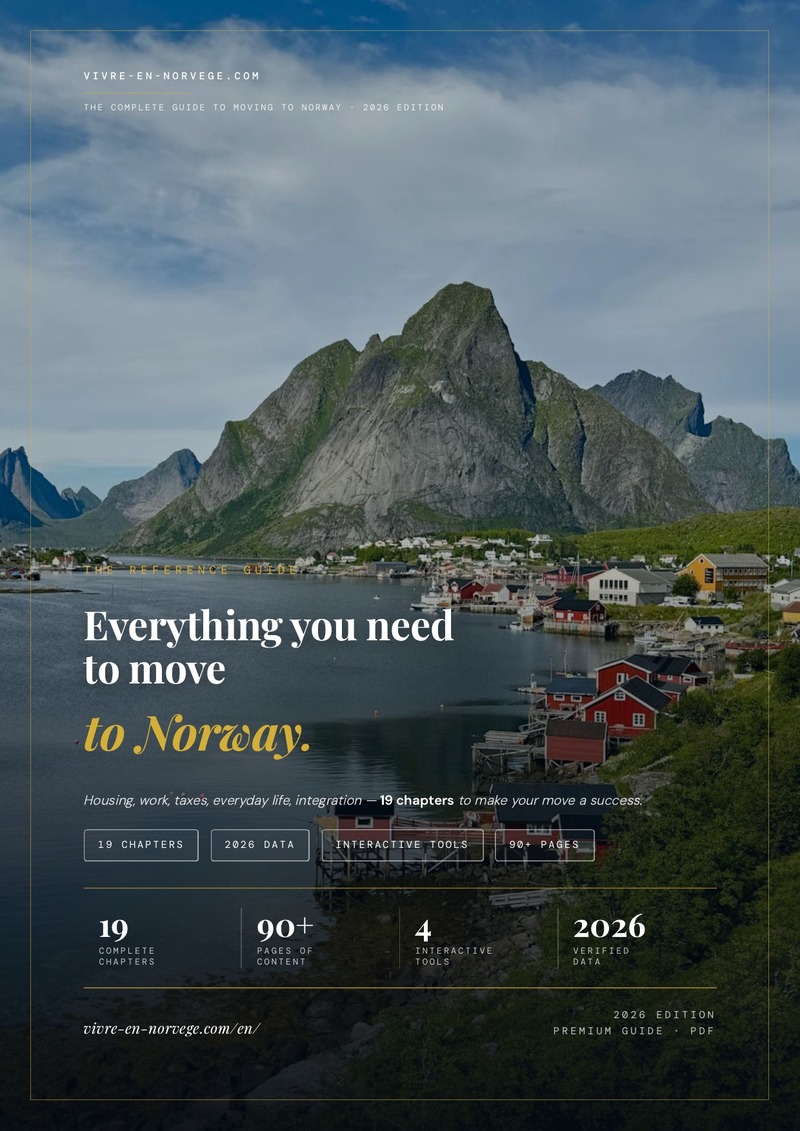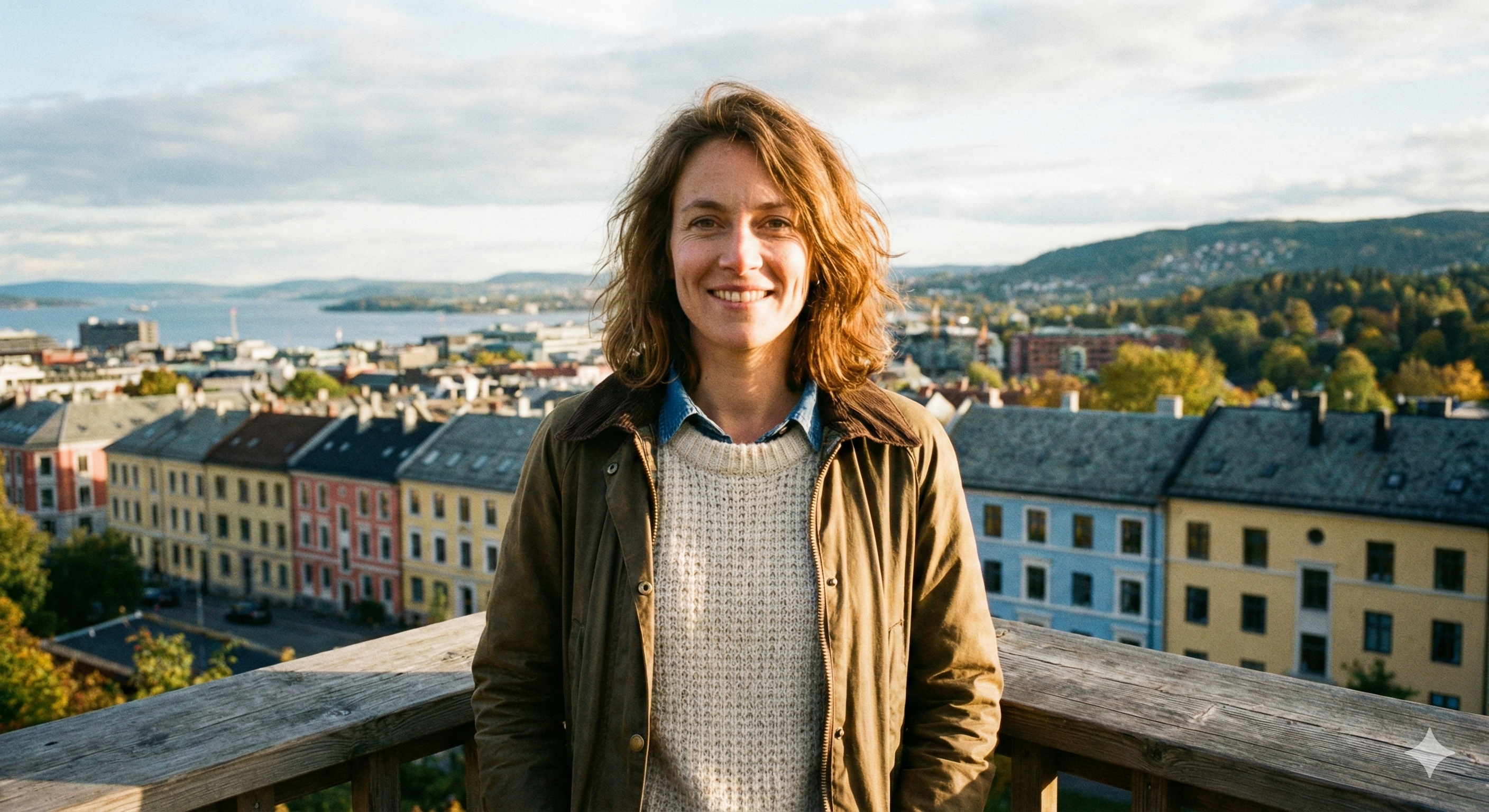
"Molde won me over one July evening, sitting on a bench at the Varden viewpoint, surrounded by roses in bloom, facing the 222 snow-capped peaks of the Moldepanoramaet. It is one of the most beautiful sights I have seen in seven years in Norway. Add the Moldejazz, the fjord and a rare gentleness of living, and you understand why Molde is nicknamed the city of roses."
— Ingrid, 7 years in Norway
Why Molde?
Molde is a charming small town nestled on the north shore of the Romsdalsfjord, in the county of Møre og Romsdal, of which it is the administrative capital. Known as "Rosenes by" (the city of roses), it gets its nickname from the countless rose bushes that adorn its gardens and parks, and that bloom every summer despite the northern latitude.
But Molde's true signature is its panorama. From the Varden viewpoint, on the hill overlooking the town, you gaze at a line of 222 snow-capped peaks on the other side of the fjord. This sight, known as the Moldepanoramaet, is considered one of the most striking views in all of Norway. It is an image that stays etched in the memory of anyone lucky enough to discover it.
Molde is also famous for Moldejazz, the oldest jazz festival in Europe, which draws artists and music lovers from all over the world every summer. With the legendary Atlantic Road (Atlanterhavsveien) nearby, the Romsdalsfjord at your feet and the mountains all around, Molde offers an exceptional setting for those seeking tranquillity, natural beauty and a strong community spirit.
+ Pros
- Exceptional panorama of 222 snow-capped peaks (Moldepanoramaet)
- Moldejazz, the oldest jazz festival in Europe
- Poetic nickname of "city of roses" and flower-filled parks
- Atlantic Road nearby (one of the most beautiful roads in the world)
- Affordable cost of living compared with big cities
- Strong community spirit and warm neighbourhood life
- Magnificent natural setting between fjord and mountains
- Cons
- Isolated location, far from major urban centres
- Limited and not very diverse job market
- Rainy climate for much of the year
- Very limited international flight connections
- Very small town with little cultural diversity
- Distance from the services and infrastructure of the big cities
Where to live in Molde?
Molde is a compact and pleasant city to live in. The town centre runs along the fjord and offers easy access on foot to shops, services and restaurants. The residential neighbourhoods extend over the surrounding hills and into neighbouring villages, offering more space and greenery. Here are the five main neighbourhoods to know about:
Sentrum (City centre)
The heart of Molde, with its shopping streets, cafés facing the fjord, the Romsdalsmuseet and the cathedral. This is where the town's pulse beats. Ideal for singles and couples who want to have everything within reach, with the Moldepanoramaet as a daily backdrop.
Bergmo
A modern commercial neighbourhood east of the town centre, with the Molde Storsenter shopping centre and many services. The housing is recent and well equipped. A practical area for everyday life, well served by public transport.
Kvam
A quiet, green residential neighbourhood, much appreciated by families. It has good schools, playgrounds and a warm neighbourhood atmosphere. Detached houses with gardens are common, and nature is a few minutes' walk away.
Røbekk
A peaceful neighbourhood west of Molde, set back from the bustle of the centre. Nature is everywhere: forests, hiking trails and open views of the fjord. Perfect for those looking for absolute calm while staying a few minutes from the centre by car.
Hjelset
A suburban village about ten kilometres east of Molde, offering the most affordable rents in the area. It has spacious houses with land, a rural atmosphere and a close-knit community. A car is essential for daily life.
If you arrive alone or as a couple and want to live at Molde's rhythm, Sentrum is ideal: summer evenings facing the fjord are unforgettable, and during Moldejazz the whole town turns into a concert stage. With a family, I recommend Kvam: the schools are close, the neighbourhood is safe and the children play freely outside. If your budget is tight, look at Hjelset, but know that you will absolutely need a car. A practical tip: search on Finn.no and Hybel.no, but talk to the locals too. In Molde, a lot of housing is found by word of mouth.
— IngridCost of living in Molde
Molde is significantly more affordable than Norway's big cities. Rents are about 35 to 40% lower than in Oslo and 20% lower than in Bergen. Food and service prices remain comparable to the rest of Norway, but the overall cost of living is very reasonable for the country. Expect around $2,600 / £1,900 a month for a couple living comfortably.
| Expense | Single | Couple | Family (2 children) |
|---|---|---|---|
| Housing | 8,000 NOK | 10,500 NOK | 13,500 NOK |
| Food | 3,200 NOK | 5,000 NOK | 8,000 NOK |
| Transport | 600 NOK | 1,200 NOK | 1,200 NOK |
| Leisure | 2,000 NOK | 2,800 NOK | 3,300 NOK |
| Other | 1,700 NOK | 1,500 NOK | 2,000 NOK |
| TOTAL | ~15,500 NOK (~$1,640 / £1,230) |
~21,000 NOK (~$2,230 / £1,660) |
~28,000 NOK (~$2,970 / £2,220) |
The FRAM bus network serves Molde and the surrounding municipalities. A monthly pass costs about 600 NOK for the Molde zone. However, since the town is small, many residents walk or cycle in the centre. A car is nonetheless recommended if you live in the outlying neighbourhoods or if you want to explore the Atlantic Road, Trollstigen and the surrounding mountains at the weekend. Molde also has an airport (Molde Lufthavn, Årø) with regular flights to Oslo.
Working in Molde
As the administrative capital of the county of Møre og Romsdal, Molde offers a job market centred on the public sector, healthcare and education. The local economy is complemented by the maritime, fishing and aquaculture industries, which are historically strong throughout the region. The market remains limited, however, and it is advisable to target the growth sectors before moving.
Sectors that are hiring
- Public administration: Molde is the seat of the county government of Møre og Romsdal (Møre og Romsdal fylkeskommune). Many jobs are available in regional administration, social services and public bodies. It is the town's number one employer.
- Healthcare: Molde hospital (Molde sjukehus) is an important institution in the region, employing doctors, nurses, care assistants and administrative staff. The healthcare sector is in constant demand for qualified labour.
- Education and research: Høgskolen i Molde (Molde University College) specialises in logistics and supply chain management. It employs lecturers-researchers and administrative staff, and attracts students and researchers from around the world.
- Fishing and aquaculture: The Møre og Romsdal coast is one of the main salmon farming and fishing areas in Norway. Aquaculture and fish processing companies offer technical and management jobs in the region.
- Maritime: The region's maritime tradition remains alive, with ship design, port logistics and offshore services companies based in Molde and the surrounding area.
Average salaries in Molde
| Job | Annual gross salary |
|---|---|
| Civil servant (administration) | 480,000 - 650,000 NOK |
| Nurse | 450,000 - 580,000 NOK |
| Lecturer-researcher | 550,000 - 750,000 NOK |
| Aquaculture technician | 420,000 - 560,000 NOK |
| Maritime engineer | 600,000 - 850,000 NOK |
The job market in Molde is small, and vacancies are not always visible on online portals. Search on Finn.no and NAV.no, but above all, work your network. In a town of 32,000 inhabitants, everyone knows everyone and many positions are filled by word of mouth. If you have a profile in healthcare, public administration or logistics, you'll have good chances. Høgskolen i Molde is an interesting entry point for researchers from abroad. For other profiles, prepare to be patient and be open to remote work if your employer allows it.
— IngridSchools and nurseries
Molde has a good-quality public school network, as everywhere in Norway. Education is free from year one to year thirteen (grunnskole and videregående). Classes are small, and teachers are attentive to the integration of foreign pupils. Molde has no international school, which is normal for a town of this size.
Public schools
- Kvam skole: A well-regarded primary school in the family neighbourhood of Kvam, with good supervision and outdoor activities built into the curriculum.
- Bergmo ungdomsskole: A modern lower secondary school in the Bergmo neighbourhood, taking pupils aged 13 to 16 in a well-equipped environment.
- Molde videregående skole: The town's main upper secondary school, offering a variety of general and vocational tracks.
- Romsdal videregående skole: The region's second upper secondary school, recognised for its technical and vocational training.
Higher education
Høgskolen i Molde (Molde University College) is a higher education institution specialising in logistics, supply chain management, economics and computer science. It is internationally recognised in the field of operations research and logistics, and welcomes students from many countries. Some programmes are taught in English, which makes access easier for foreigners.
International and English-language education
There is no international school or English-language section in Molde. The nearest international school is Ålesund International School (ages roughly 5 to 15), which is a long daily commute from Molde, so most expat families choose the local Norwegian school. English-speaking children keep up their English easily: it is taught from year 1, and TV and films are shown in the original version.
Nurseries (Barnehage)
Molde has about thirty municipal and private nurseries (barnehage). The monthly fee is capped by the state at around 3,000 NOK a month, with discounts for siblings. Registration is done on the Molde municipality's online portal, generally in March for a start in August. Places are generally easier to get than in Oslo or Bergen.
The absence of an international school may worry you, but let me reassure you: Norwegian public schools are excellent, and this is even more true in a small town like Molde. Classes are small, teachers know every child by their first name, and integration happens naturally. My own children learned Norwegian in a few months through immersion. In Molde, the school community is very close-knit: parents know each other, children play together after school, and that makes it much easier for the whole family to adapt. And English-speaking children keep up their English without any trouble.
— IngridWhat to do in Molde?
Despite its modest size, Molde offers a surprising wealth of activities. Between the legendary panorama, the internationally renowned jazz festival, excursions to the Atlantic Road and Trollstigen, and the many outdoor possibilities around the Romsdalsfjord, life here is far from bland.
Must-see sights
- Varden (the Moldepanoramaet): Molde's emblematic viewpoint. From this lookout perched on the hill above the town, you gaze at a spectacular line of 222 snow-capped peaks on the other side of the Romsdalsfjord. It is the iconic image of Molde, reachable by car or on foot by a path from the town centre. On a clear day, the sight is breathtaking.
- Moldejazz: Founded in 1961, Moldejazz is the oldest jazz festival in Europe. Every July, for a week, the town turns into a giant stage: concerts outdoors, in clubs, on squares and even on the fjord quays. World-renowned artists perform, and the atmosphere is electric.
- Atlantic Road (Atlanterhavsveien): Considered one of the most beautiful roads in the world, this 8 km road links a series of islets and reefs by spectacular bridges over the ocean. It is about 30 minutes from Molde and makes an unforgettable day trip, especially in stormy weather when the waves crash against the bridges.
- Romsdalsmuseet: An open-air museum in the heart of Molde, presenting more than 40 historic buildings from the Romsdal region. You discover local history, traditional architecture and the ways of life of the past through permanent and temporary exhibitions.
- Rose gardens: Molde wears its nickname "city of roses" with pride. Rose bushes adorn the public parks, private gardens and streets of the town. The municipal rose garden is a peaceful place for a walk, particularly in July when the flowers are in full bloom.
Excursions from Molde
- Trollstigen: The famous mountain road with 11 hairpin bends, about 1.5 hours from Molde. Open from May to October, it offers dizzying panoramas and a viewing platform suspended above the valley. It is one of the most visited sites in Norway.
- Romsdalsfjord: The fjord on which Molde is built offers endless possibilities for boat trips, fishing and kayaking. Ferry excursions let you explore the villages and coves along the fjord.
- Aukra and Otrøya islands: Reachable by car or ferry, these islands offer wild coastal scenery, seabird colonies and little-visited hiking trails.
Outdoor activities
- Hiking in the Romsdal mountains (Romsdalseggen, Moldegård)
- Sea and river fishing in the Romsdalsfjord and surrounding area
- Sea kayaking along the coast and in the fjord's coves
- Cross-country and alpine skiing in winter (local resorts)
- Cycling on the coastal roads and cycle paths of the region
- Swimming in summer in the sheltered coves of the fjord
Free activities
- Go up to the Varden viewpoint to admire the Moldepanoramaet
- Stroll through the rose gardens in summer
- Wander around the harbour and along the fjord promenade
- Explore the Romsdalsmuseet (free admission at certain times)
- Enjoy the free open-air concerts during Moldejazz
- Hike the marked trails around the town
Cultural events
- Moldejazz (July): The oldest jazz festival in Europe, a week of concerts, workshops and musical encounters throughout the town.
- Bjørnsonsfestivalen: An annual literary festival in honour of Bjørnstjerne Bjørnson, the Nobel Prize-winning author born in the region, with talks, readings and debates.
- Moldemarkedet: A large traditional market held every summer, with local producers, crafts and entertainment.
The climate of Molde: maritime, mild but damp
Molde enjoys an oceanic climate tempered by the Gulf Stream. Winters are relatively mild for the latitude (average temperatures around 0°C in January), while summers are cool and pleasant, with average temperatures around 15°C in July. Snow is possible in winter, but it doesn't last long in the town centre thanks to the maritime influence.
Rain is a faithful companion in Molde. The town receives an average of 1,500 to 1,700 mm of precipitation a year, spread over about 200 days. Autumn and winter are the wettest seasons. Wind is also common, especially in autumn, because of the town's exposure to the Romsdalsfjord and the Atlantic.
Summer is the most pleasant season, with long, bright days (almost 24 hours of daylight in June) and roses in bloom all over town. It is also the time of Moldejazz, which gives the town a festive, warm atmosphere. In winter the days are short (about 6 hours of daylight in December), but the northern lights are sometimes visible from Molde on clear nights.
Molde's climate is typical of the Norwegian west coast: mild but very wet. Norwegians have a perfect saying for it: "There is no such thing as bad weather, only bad clothes." Invest in a good Gore-Tex jacket, waterproof boots and several layers of merino wool. An umbrella is almost useless because of the wind: go for a hood instead. And when the sun breaks through the clouds and lights up the 222 snow-capped peaks, drop everything and head up to Varden. Moments like that are worth all the gold in the world.
— IngridInternational & English-speaking community in Molde
Molde's international community is very small. It is made up mainly of partners of Norwegians, students and researchers at Molde University College (Høgskolen i Molde) and professionals who settled in the region for work or personal reasons. There is no organised expat association and no international school.
This small size has an advantage: the internationals in Molde get to know each other quickly and form an informal but warm support network. Every newcomer is welcomed kindly, and practical tips travel fast.
- Online groups: Search Facebook for "Expats in Molde" or "Expats in Møre og Romsdal" to find small regional groups covering Molde, Ålesund and Kristiansund, where people swap advice and good tips.
- Embassies: Most English-speaking countries (UK, US, Canada, Ireland) have their embassy in Oslo; check your government's travel site for consular services.
- Local associations: Joining sports clubs, choirs or neighbourhood associations is the best way to integrate. The Molde Turistforening (hiking association) organises regular outings suitable for all levels.
- Norwegian classes: Molde's introduction centre (Molde Voksenopplæring) offers Norwegian courses for foreigners. Learning the language is absolutely essential in a small town like Molde, where English is not always enough in everyday life.
- Høgskolen i Molde: The university campus is a meeting place for the town's small international community. Events and seminars open to the public are a good chance to meet people of different nationalities.
In Molde, integration comes above all through the Norwegian language and taking part in local life. People in Romsdal are welcoming but reserved: they won't come up to you spontaneously, but if you make the first move, you will be pleasantly surprised by their warmth. Sign up for Norwegian classes as soon as you arrive, join a club (hiking, sport, music) and take part in local events, especially Moldejazz. It is during that magical week that barriers come down and friendships are made. And do get in touch if you have questions about life in Molde: I'll be happy to point you in the right direction.
— IngridQuestions about life in Molde?
Find my ideal city