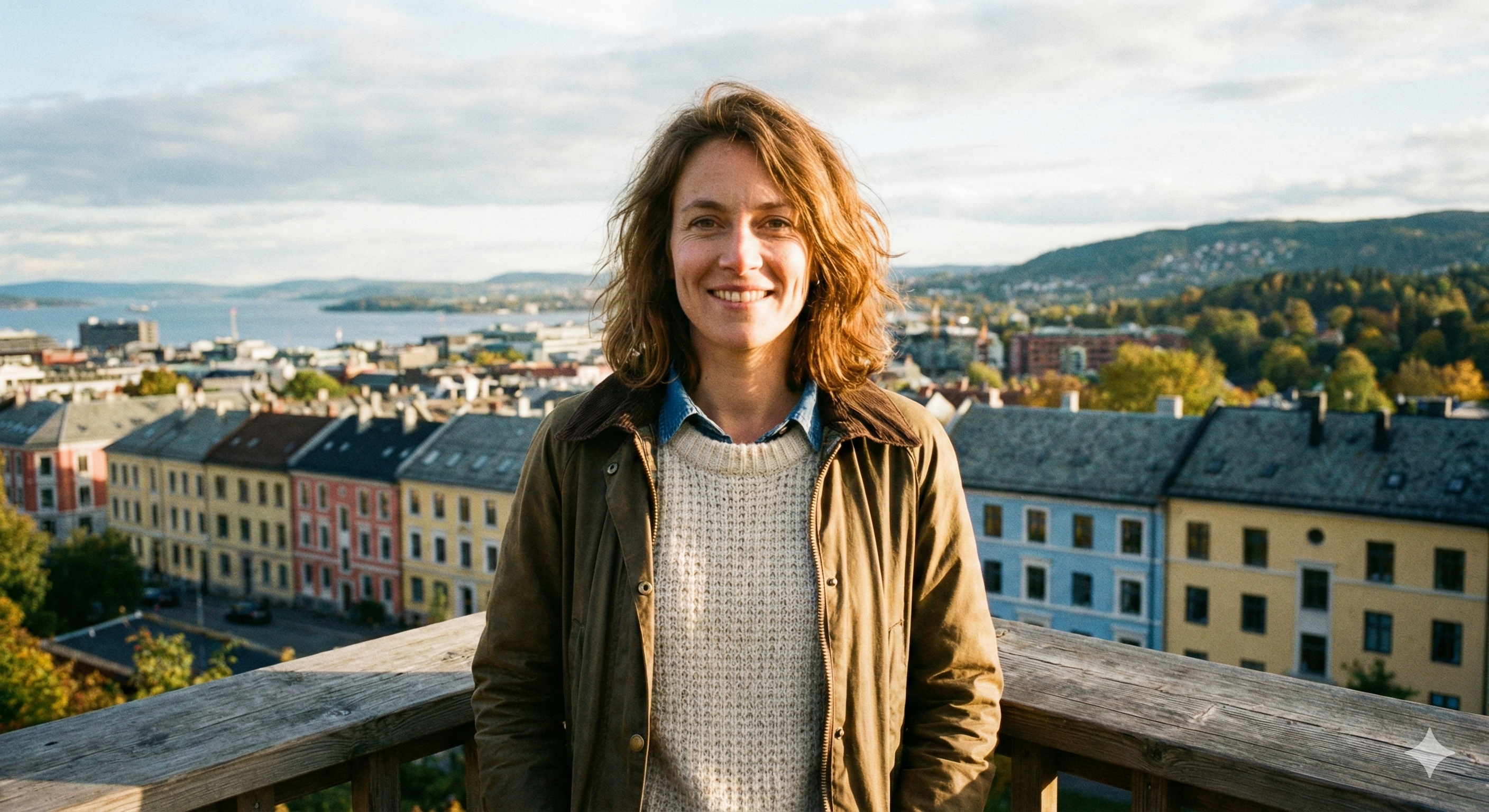
“Tønsberg is a real favourite of mine. It is the oldest town in Norway, founded by the Vikings more than a thousand years ago, and yet it has managed to stay lively and modern. In summer, the Brygga harbour turns into an incredible party spot. In winter, the town regains its calm and historic charm. If you're looking for the perfect blend of history, sea and proximity to Oslo, Tønsberg is a gem.”
— Ingrid
Why Tønsberg?
Tønsberg claims the title of Norway's oldest town, with a founding said to date from around 871 AD. Located in the Vestfold region, on the western shore of the Oslo fjord, this coastal town carries more than a thousand years of Viking history. It was very close by that the famous Oseberg ship was discovered, one of the most important archaeological treasures in Scandinavia.
But Tønsberg is not just an open-air museum. The town has reinvented itself as one of Norway's most popular summer destinations. The Brygga district, with its restaurants, bars and waterfront terraces, attracts thousands of Norwegians every summer who come to enjoy the sun and the coastal atmosphere. Only 1.5 hours from Oslo by car or train, Tønsberg offers a human-scale way of life while staying well connected to the capital.
With its 57,000 inhabitants, the town has all the essential services: a hospital, good schools, a varied range of shops and a surprisingly rich cultural offering for its size. Vestfold, of which Tønsberg is one of the main towns, is one of the sunniest and mildest regions of Norway, which makes it a particularly pleasant place to live for those who dread harsh Scandinavian winters.
+ Pros
- Norway's oldest town with an exceptional Viking heritage
- Magnificent coastal setting with accessible beaches and islands
- Lively summer atmosphere around Brygga
- Only 1.5 hours from Oslo by car or train
- Good schools and family infrastructure
- Charming, pedestrian-friendly town centre
- Site where the Oseberg ship was discovered
- One of the mildest climates in Norway
- Cons
- Very seasonal town (quiet winters, even too quiet)
- Higher rents than in neighbouring Vestfold towns
- Commuter traffic to Oslo at rush hour
- Fairly limited local job market
- Heavy tourist crowds in summer
Where to live in Tønsberg?
Tønsberg is a compact town whose centre is easy to cover on foot. Residential neighbourhoods extend inland and along the coast, offering very different atmospheres depending on whether you prefer town-centre life, family calm or proximity to the sea. Here are the five main neighbourhoods to know.
Sentrum / Brygga
The historic heart of Tønsberg with the famous Brygga harbour, shops, restaurants and summer nightlife. Ideal for those who want to be in the middle of everything and enjoy the coastal atmosphere.
Kaldnes
Former shipyard converted into a modern waterfront residential neighbourhood. New flats with fjord views, marina and promenades. A rapidly growing neighbourhood, popular with young professionals and couples.
Eik
Family residential neighbourhood west of the town centre. Detached houses with gardens, good schools nearby, playgrounds and easy access to shopping areas. The favourite neighbourhood of families with children.
Sem
Quiet suburb north of Tønsberg, towards Torp and the E18 motorway. More affordable housing, calm and green surroundings. Well placed for Oslo commuters thanks to its proximity to Sem station.
Husøy / Husøysund
Residential island connected to the mainland by a bridge, south of the town. Picturesque setting with sea views, small marinas and characterful houses. A unique place to live at the rhythm of the water.
If you arrive as a couple or on your own and like the buzz, Sentrum or Kaldnes will be perfect: you enjoy the harbour, the restaurants and neighbourhood life. With a family, I recommend Eik without hesitation: it's quiet, the schools are excellent and the children have space to play. For tighter budgets, Sem is a good compromise with easy access to the train to Oslo. Be careful, though: in summer, the centre can be very lively in the evening, which some people love and others find disturbing.
— IngridCost of living in Tønsberg
The cost of living in Tønsberg is slightly below that of Oslo, particularly for housing. Rents are on average 15 to 20% lower than in the capital, which makes the town attractive for families and commuters. On the other hand, food and transport prices remain comparable to the rest of southern Norway. Tønsberg's summer popularity can also push up some prices in high season.
| Expense | Single | Couple | Family (2 children) |
|---|---|---|---|
| Housing | 9,000 NOK | 12,000 NOK | 15,500 NOK |
| Food | 3,500 NOK | 5,200 NOK | 8,500 NOK |
| Transport | 900 NOK | 1,800 NOK | 2,000 NOK |
| Leisure | 2,000 NOK | 2,800 NOK | 3,500 NOK |
| Other | 1,600 NOK | 2,200 NOK | 2,500 NOK |
| TOTAL | ~17,000 NOK (~$1,800 / £1,350) |
~23,000 NOK (~$2,440 / £1,820) |
~30,000 NOK (~$3,180 / £2,380) |
The monthly VKT (Vestfold Kollektivtrafikk) transport pass costs around 900 NOK for the Tønsberg zone. If you commute daily to Oslo by train (Vy), the monthly Tønsberg-Oslo pass comes to around 3,400 NOK. Many commuters use the 1.5-hour journey to work on their laptops. Cycling is also very popular in town, especially from spring to autumn.
Working in Tønsberg
Tønsberg's job market is smaller than that of Norway's big cities, but it is supported by several key sectors. Proximity to Oslo also allows many residents to combine life in Tønsberg with a job in the capital. Remote working, which has expanded considerably since 2020, has made this option even more viable.
Sectors that are hiring
- Maritime industry: Tønsberg has an important maritime heritage. The commercial port and companies linked to shipping, shipbuilding and maritime services employ a significant share of the local workforce.
- Industry and chemicals: The Jotun group, world leader in paints and coatings, has its global headquarters in Sandefjord, right next to Tønsberg. This proximity creates a job pool in chemicals, engineering and industrial logistics. Many Jotun employees live in Tønsberg.
- Healthcare: Tønsberg hospital (Sykehuset i Vestfold) is one of the main healthcare institutions in the Vestfold region. It regularly recruits doctors, nurses and allied health staff.
- Tourism and catering: Tønsberg's strong summer appeal generates many seasonal jobs in hotels, restaurants and leisure activities, mainly from May to September.
- Public sector: Tønsberg municipality and Vestfold regional services employ a substantial number of people in administration, education, social services and culture.
Average salaries in Tønsberg
| Job | Annual gross salary |
|---|---|
| Industrial engineer (Jotun/maritime) | 650,000 - 850,000 NOK |
| Nurse | 500,000 - 620,000 NOK |
| Teacher | 480,000 - 600,000 NOK |
| Catering staff | 340,000 - 430,000 NOK |
| Administrative (public sector) | 450,000 - 580,000 NOK |
Finn.no remains essential for all local offers. NAV.no (the public employment service) also publishes jobs in the region. For jobs at Jotun, check jotun.com/careers directly. Jobbnorge.no lists public-sector and hospital posts. Don't forget LinkedIn, increasingly used by Norwegian recruiters.
If you're thinking of working in Oslo while living in Tønsberg, it's perfectly doable. Many people I know make that daily commute. The train is comfortable and punctual, and more and more employers accept 2 to 3 days of remote work per week. That said, it's best to negotiate these conditions before signing your contract. Locally, don't underestimate networking: in a town this size, opportunities often circulate by word of mouth.
— IngridSchools and nurseries
Tønsberg has a good public school network, as everywhere in Norway. Education is free from year 1 to year 13 (grunnskole then videregående skole). For expat families, children generally settle in well thanks to welcome programmes for pupils who don't speak Norwegian.
Main schools
- Byskolen: Primary school in the town centre, known for its historic setting and the quality of its teaching. It welcomes pupils from different backgrounds and offers support in Norwegian as a second language.
- Eik skole: Primary school in the Eik neighbourhood, very popular with expat families. Quiet environment, good sports facilities and an integration programme for foreign children.
- Sem skole: Primary school in Sem, well equipped, with a good programme of after-school activities and a caring welcome for newcomers.
- Tønsberg videregående skole: The town's main upper secondary school, offering varied general and vocational tracks.
- Skagerak International School Tønsberg: English-language IB school (Primary Years and Middle Years Programmes), open since 2024. Skagerak's main campus in nearby Sandefjord also offers the IB Diploma for older students. Like most international schools in Norway it is fee-paying with state support, so fees are usually far below UK or US private-school fees.
Nurseries (Barnehage)
Tønsberg has many municipal and private nurseries (barnehager). The monthly fee is capped by the state at around 3,000 NOK per month per child. Registration is done online on the Tønsberg municipality website, usually in March for a start in August. Places are allocated as a priority to children living in the municipality.
After-school activities
Children in Tønsberg have access to many activities: sailing and water sports (the town is by the sea), football, handball, gymnastics, music and visual arts through the municipal kulturskole (culture school). Local sports clubs, such as Tønsberg Turn, are very active and welcome children from a very young age.
If teaching in English matters to your family, Skagerak International School now has a campus right here in Tønsberg. But don't overlook the public schools: they are free, of good quality, and English-speaking children keep up their English easily, since it is taught from the first year and films and TV are shown in their original version. Children generally settle in very quickly. My own children attended a similar school in the Oslo area and within a few months they were speaking fluent Norwegian with their classmates. Total immersion is the best method.
— IngridThings to do in Tønsberg
Tønsberg is a town where Viking history meets the seaside good life. Between medieval remains, a lively waterfront and unspoilt nature, there is no shortage of things to do, especially if you like alternating culture and the outdoors.
Must-see sights
- Slottsfjellet (castle hill): The medieval tower overlooking the town is the symbol of Tønsberg. The ruins of the royal fortress offer a panoramic view of the fjord, the islands and the whole town. A place steeped in history that is lovely for a stroll.
- Brygga (the harbour): Tønsberg's waterfront is the beating heart of the town in summer. Restaurants, bars, ice-cream parlours and terraces line the quays. This is where Norwegians come to enjoy the sun and the festive atmosphere.
- Oseberg burial mounds: A few kilometres from Tønsberg, the Borre site and the Viking burial mounds are a reminder that the Oseberg ship was discovered here in 1904, now displayed in the museum in Oslo. A place of pilgrimage for Viking history enthusiasts.
- Vestfold Viking Trail (Vestfold Viking route): A route linking several Viking archaeological sites in the region: burial mounds, rune stones, farm ruins and burial places. Tønsberg is one of its natural starting points.
Nature and outdoors
- Ilene nature reserve: Protected wetland by the fjord, a paradise for birdwatchers. Dozens of species of migratory birds can be seen, especially in spring and autumn. Marked walking paths cross the reserve.
- Island excursions: Tønsberg is surrounded by an archipelago of islands and islets reachable by boat or kayak. Nøtterøy and Tjøme, just to the south, offer magnificent beaches, coastal paths and unspoilt nature. In summer, ferry connections are frequent.
- Farris Bad (Larvik): About thirty minutes by car, this luxury spa overlooking the fjord is the ideal place for a day of relaxation. Outdoor pools with sea views, saunas and Nordic treatments.
- Coastal hikes: The coastline around Tønsberg is perfect for lovely hikes: the walk along the coast towards Nøtterøy or the trails of the Mølen nature park and its thousand-year-old stone fields.
Culture and events
- Tønsberg Medieval Festival (Tønsberg Middelalderfestival): Every summer, the town goes back in time with this festival celebrating its medieval heritage. Craft markets, knight shows, early music and historical re-enactments at the foot of Slottsfjellet.
- Slottsfjellfestivalen: Open-air music festival held on castle hill, with an international line-up of pop, rock and electro. One of the most popular festivals in southern Norway.
- Haugar Vestfold Kunstmuseum: Art museum housed in a historic building, with exhibitions of contemporary Norwegian and international art.
- Christmas market: In December, the town centre comes alive with a traditional Christmas market with local crafts, gløgg (mulled wine) and Norwegian specialities.
In summer, nothing beats a boat trip in the Tønsberg archipelago with a picnic. Children love the beaches of Tjøme and you can easily spend the day hopping between islands. In winter, go up to Slottsfjellet when there is snow: the view of the frozen fjord is unforgettable. And if you're passionate about history like me, the Vestfold Viking route will keep you busy for many weekends.
— IngridThe climate in Tønsberg
Tønsberg enjoys one of the mildest climates in Norway. Located on the Vestfold coast, sheltered from the prevailing winds by the surrounding land and islands, the town enjoys relatively warm summers and winters that are moderate compared with the rest of the country.
Summer is Tønsberg's headline season. From June to August, temperatures range between 15 and 20°C, with regular peaks above 25°C on fine days. Sunshine is generous and the days are long, which explains the town's popularity as a summer destination. Swimming in the fjord is perfectly possible in July and August, when the water reaches 18 to 20°C.
Winter is cold but rarely extreme. Temperatures average around -3°C in January, with a few snowy spells that generally don't last very long. Vestfold receives far less rainfall than the west coast (Bergen): about 800 mm a year compared with over 2,000 mm. Winter days are short, with only 6 to 7 hours of daylight in December, but it is a far cry from the polar night of northern Norway.
Spring arrives relatively early, with the first flowers in April, and autumn brings lovely colours to the Vestfold forests until the end of October.
Compared with Oslo, Tønsberg is slightly milder in winter thanks to the proximity of the sea. And compared with Bergen, it's night and day when it comes to rain! That is one of Vestfold's big advantages. Still, equip yourself with a good winter coat and suitable shoes for the months from December to February. In summer, pack sun cream and swimwear: days on the beaches of Tjøme are a real treat.
— IngridInternational & English-speaking community in Tønsberg
The international community in Tønsberg is small but present. The town attracts expats of many nationalities, often for family reasons (Norwegian spouse) or work (Jotun, maritime sector). While the network is less structured than in Oslo or Bergen, opportunities to meet do exist.
- Facebook groups: Search Facebook for “Expats in Tønsberg” or “Expats in Vestfold”: regional groups cover Tønsberg, Sandefjord, Larvik and surrounding areas, with practical tips and the occasional meet-up.
- Oslo's international scene: InterNations and the many Meetup.com groups in Oslo are reachable by train for occasional events.
- Language cafés: Public libraries and the Red Cross run free language cafés (språkkafé) where you can practise Norwegian and meet other newcomers of all nationalities.
- Informal meet-ups: The cafés in the centre and the terraces of Brygga are natural meeting places in summer. Don't hesitate to use the online groups to organise get-togethers over drinks.
In a town the size of Tønsberg, integration is above all about local life: sign up for a sports club, take part in the dugnad (neighbourhood communal work days), join a foreldregruppe (parents' group) at your children's school. Norwegians from Vestfold are known for being welcoming, and speaking even a little Norwegian will open many doors. The Norwegian classes offered by the municipality are an excellent starting point.
When you live in a small Norwegian town, you can't rely solely on the expat community. That's a blessing in disguise: you integrate into local life much faster. I met my best friends in Norway at my children's barnehage and at dugnad in my neighbourhood. In Tønsberg, that neighbourly dynamic is even stronger than in Oslo.
— IngridQuestions about Tønsberg?
Find my ideal city